Showing posts with label squash. Show all posts

Tuesday, July 8, 2014

Peanut Noodles with Spring Greens. And an Egg.

For what it's worth, I wasn't complaining about the cold in February. Complaining about the dark, maybe. I save my temperature complaining for when it's hot out. It pairs well with my cantankerous stubbornness about air conditioning. Today peaked at 95°. Certainly not as hot as it can get around here, but just as certainly beyond comfortable.

Regardless of how warm it was today, here or where you were, we all have those days where the mere thought of turning on the stove makes you want to get another icy drink out. I've been realizing how much peanut sauce is a hot-weather staple for me recently: Fresh summer rolls dipped in it, drizzled over lettuce-wrapped rice (with or without anything else), or even just a bowl of veggies and a jar of peanut sauce.

This has been the recipe I've come back to more than others recently. Here, the peanut sauce dresses up cold buckwheat noodles tossed with long, thin cut cucumber or summer squash (inspired by zucchini noodles) and the piquant blend of greens I've been gradually thinning out of my garden. And ,just for good measure, an egg on top. Since discovering steam-cooked hard boiled eggs (a method which I can't recommend heartily enough), I've been putting them in all kinds of things. I'll let The Food Lab go into detail about the method, but by way of my recommendation, it is faster than other boil methods (since you only have to wait for ½" of water to come to a boil), and I have had an almost perfect peel record with it. The closest thing to an imperfect peel I've had since starting to use it is actually in the photos of this dish, and I'm pretty sure that one was my fault.

It's pretty good without the egg, too, though, and is totally vegan without it. If you're not eating eggs for whatever reason, the peanut sauce does provide a little protein, but I've also made and enjoyed this with crispy-fried bits of tempeh.

Peanut Noodles with Spring Greens

2 servings
  • 100 g soba noodles (one bunch)
  • 1 cucumber or small summer squash/zucchini
  • ¼ c. peanut sauce (see below)
  • 2-3 c. mixed baby greens (1-2 good handfuls per serving)
  • 2 eggs, boiled (or steamed!) to your preference (I like about 8 minutes here)
  • optional but nice:
    • scallion, sliced thin
    • a few sprigs of cilantro


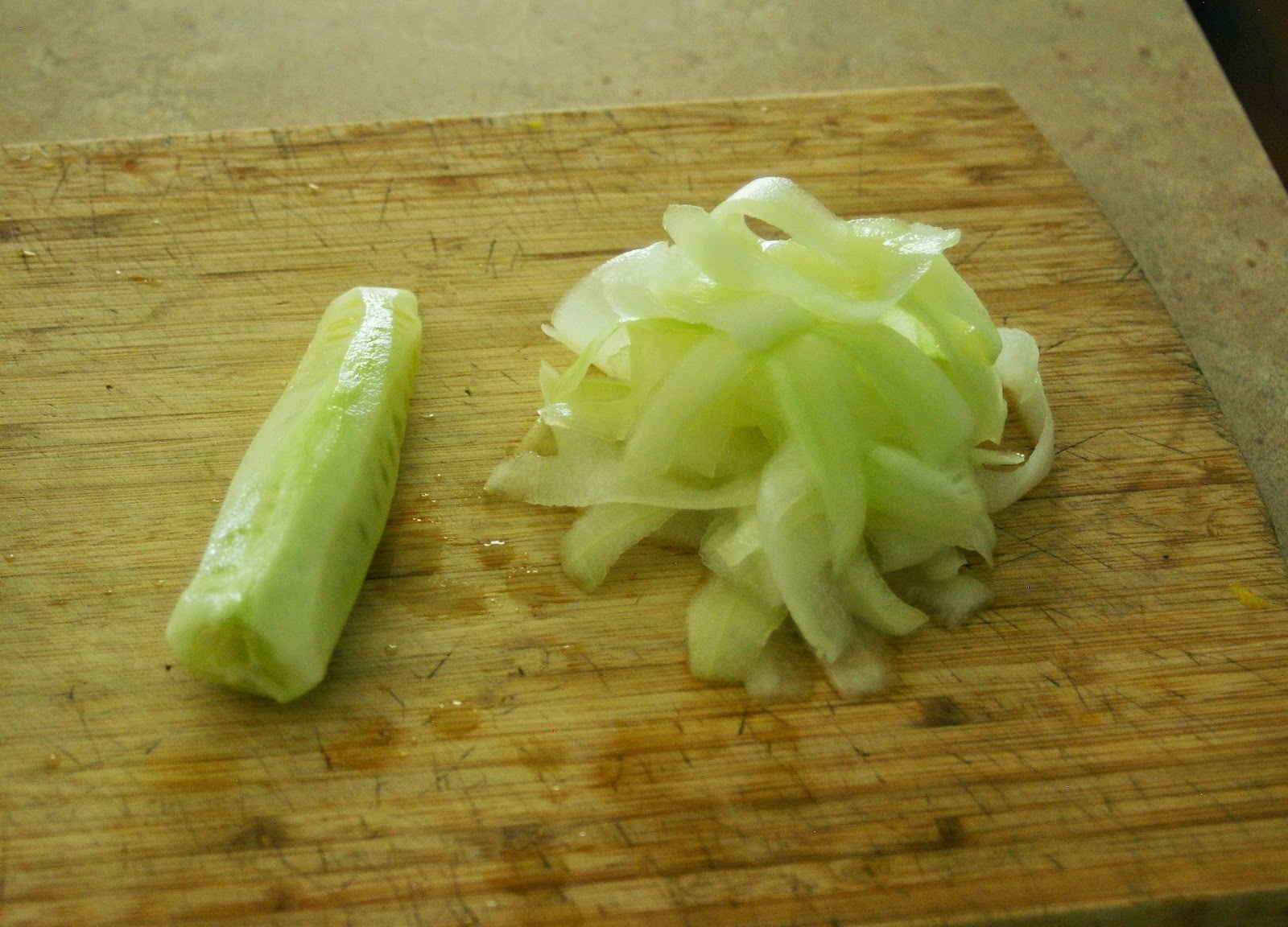
Start by putting on water to boil the noodles and cook the eggs (if you've got time, you can use the same pot and do the eggs after the noodles). While the water is heating up, peel your cucumber or squash. They're both very tasty here, and bulk out the noodles with cool fresh flavor. If you've got a spiral slicer or julienne peeler, good for you. You know what to do, so go to town. Otherwise, use your vegetable peeler to peel thin slices off of the cucumber or squash until you get down to the seeds. If you prefer, you can slice these strips thinner to blend in with the noodles more.

Once the noodles are cooked, make sure to run cool water through them until chilled. Toss the noodles and cucumber/squash in the sauce until well coated. Divide up into bowls and toss with a handful of greens, then top with an egg.


Peanut Sauce

vegan, gluten-free depending on your soy sauce
makes about 1 cup of sauce
  • ¼ c. peanut butter (Mine is creamy, natural & salted. Yours will work too, but you might have to add more or less stuff)
  • 1-2 Tblsp. sugar
  • 1 clove garlic, minced
  • 1 tsp. minced fresh ginger
  • ½-1 tsp. thick chili-garlic sauce like Sriracha or sambal oelek
  • (or more, to taste)
  • 2 Tblsp. soy sauce
  • ¼- c. water
Add all ingredients except water. Add water a tablespoon or so at a time, stirring until thoroughly combined before adding more water. If you add too much water at once, the suspension will break and you'll get weird thready peanut-butter bits in seasoned water. If this happens, add a little more peanut butter and stir until smooth. You'll have to add more water later. Adjust seasoning as necessary.

Wednesday, November 7, 2012

Butternut, Coconut, Curry-nut?

Apparently, this has turned into the squash blog. Realizing this would be my third subsequent squash post, I almost posted about something else. However, the following things occurred to me:
  1. These are three quite different squash recipes, illustrating the versatility of the vegetable.
  2. Who would come here who doesn't want to hear more about squash‽
In my last post about squash-filled profiterole, I went on, possibly at too great a length, about why roasting a bunch of squash and keeping it in your fridge is a fabulous idea. I won't repeat myself, but it is; consider this recipe Exhibit B in the case. A rich, satisfying dish that balances sweet and savory, this contains a complete protein when you add rice and happens to be vegan, gluten-free and nut-free (the coconut, despite its name, does not affect those with tree-nut allergies).

As long as you already have roasted squash, this curry comes together in no time flat - about 20 minutes at the outside. Although I sometimes recommend forgetting to start the rice until well into cooking a dish to give you an incentive to let something simmer longer, this is a dish where you want to make sure to start the rice ahead of the other dish so you won't end up waiting on the rice.

I used a smallish (probably 2-3 lb) butternut squash for this dish, but other varieties of winter squash will also work. To roast squash, halve it, scoop out the seeds and place on a lightly oiled (foiled if you don't want to scrub) baking sheet. Bake at 375° for 35-60 minutes. Check at 30 minutes and poke the squash at its thickest part, then estimate how much longer until it's tender or check every 5-10 minutes.

Squash, Coconut & Chickpea Curry

vegan, gluten-free, nut-free
Takes about 20 minutes, serves 3-4
  • about 2 lb winter squash, roasted and cut into 1" cubes
  • 1 onion
  • 3 cloves garlic
  • 1 tsp brown mustard seed
  • ½ tsp. fenugreek seed
  • 1 tsp. cumin seed
  • ½ tsp. turmeric
  • ½ tsp. coriander
  • ½-1 tsp. red pepper flakes
  • ½-1 tsp. salt
  • 1 15 oz. can chick peas, drained
  • 1 can coconut milk
In large, heavy bottomed pot, heat a few teaspoons of veg. oil over high heat. Add mustard, fenugreek, cumin and coriander. Once the seeds start to sizzle and pop, add the garlic and onion. Once onion has started to soften and brown a bit, add chick peas, turmeric, red pepper and salt. Toss, then add squash and coconut milk. The squash will start to break down and blend into the coconut milk, making for thick, saucy goodness. The squash shouldn't totally dissolve and dissappear, though.

Simmer for a few minutes, adjust seasoning and serve over rice. Cilantro is also nice addition right at the end, too.

Monday, October 29, 2012

Pumpkin Caramel Profiterole

Let's talk about cream puffs. No, let's talk about squash first. I've eaten winter squash, in one form or another, for the last five days. The only problem with this is that I am currently out of squash.

Too many people go straight for cutting winter squash in half, adding butter, brown sugar and cinnamon and baking. There's nothing wrong with that, but squash can do so much more. In the last week, I have eaten squash in a Mexican-style rice bowl with beans and rice, a South Indian-style coconut and chick pea curry, on flatbread with eggs and tomato jam, in macaroni and cheese, and in cream puffs. And, of course, plain by the spoonful. It is no coincidence that asquash, one of the Algonquin roots from which the English word squash derives, simply means "eaten."

Roasting squash really is the only way to cook it: simmering it leaves it with a stringy texture and can sap out the flavor and copious nutrients. Roasting, on the other hand, enriches a squash's sweetness and creamy texture. I like to roast squash ahead of time, even when I'm not going to use it immediately, often a few at a time. As long as you're going to be at home for an hour, you can roast a squash. It doesn't need much attention while cooking. It keeps in the fridge for two weeks or so (in the unlikely occurrence that it sticks around that long) and provides instant squashy gratification.

To roast any variety of winter squash, turn on the oven to 375°; cut your squash in half and scoop out the seeds. The seeds, of course, can be roasted on their own for a toasty snack. Lay the halved squash cut side down on a lightly oiled sheet pan. Use foil if you don't feel like soaking/scrubbing later. Let it cook until squash is tender to the touch and the skin has started to brown up some. Depending on how large your squash is, this could be anywhere from 35-60 minutes. Set a timer for 30 minutes, poke the squash at its thickest point and decide how long you want to set the next timer for based on your squash-poking assessment.

Don't be too rigid in your squash variety selection, either. You may have a recipe for butternut squash soup or pumpkin pie, but you may find that you like the reverse, or that buttercup makes the best ravioli filling or that you are a fiend for hubbard squash in any form you can get it. A friend living in Germany for the year is finding that the only variety she can get, Hokkaidokürbis (Hokkaido, red kuri or baby red hubbard squash), works really well in places she'd expect to use pumpkin or butternut. A guide to about a dozen popular winter squash varieties is available here.

But enough about that. Let's talk about cream puffs, or profiterole, which is a fancy word which refers to anything creamy stuffed in a pâte à choux shell, usually ice cream or whipped cream (cream puffs typically involve pastry cream). The choux paste shell seems to have fallen out of favor in recent times. This is really a shame; they're a versatile vehicle for flavors sweet and savory. And when you think about it as basically making baked bubbles—which it is—making the shells themselves becomes magic even before you fill them.

Which brings us back to roasted squash. If pumpkin pie season can't come soon enough for you, take note: pumpkin profiterole. Or, whatever kind of roasted winter squash you have profiterole. In fact, unless you're starting with a premade crust, these can be ready faster than a pumpkin pie. Moreover, pâte à choux is not appreciably more fussy than a pie crust (Warning: making pâte à choux can be habit-forming). Also, they look way more impressive, especially when you add a drizzle of caramel. The filling is a mixture of roasted squash, brown sugar and the spices you would add to pumpkin pie, folded with a simple whipped cream. The overall effect is an ethereal few bites of creamy, spiced delight.

Pumpkin Profiterole

The recipe here is more a series of components rather than one recipe. After making the choux paste shells, squash filling and caramel, spoon or pipe the filling into the shells and drizzle caramel over the top. Serve promptly.

Pâte à choux

Adapted from Joy of Cooking
makes about 15 two-inch cream puff shells
  • 4 large eggs at room temp.
  • Dry mix:
  • 1 c. AP flour
  • 1/4 tsp salt
  • (optionally add 1 T sugar)
  • Wet Mix:
  • 1 c water/milk
  • 1/3 c. butter
Preheat oven to 400°. Sift dry mix together and set aside. Heat wet mix together in a large, heavy saucepan;
when it boils, add dry mix all at once and stir briskly, until it becomes a smooth paste and stops sticking to the sides and bottom of the pan. (see above)

Add eggs one at a time, beating thoroughly after each addition (some people like to do this in the food processor). Spoon or pipe the paste onto parchment-lined sheet pans in mounds about 1½" across, leaving room for them to puff up. Bake at 400° for 10 minutes, then turn the oven down to 350° and bake for another 25 minutes, or until quite firm to the touch. Gently stab each with a sharp paring knife to vent it so it cools enough to accept filling without melting it quickly.

Filling

  • 1 c. mashed squash (canned will also work)
  • ½ c. brown sugar
  • ½ tsp. salt
  • 1 tsp. cinnamon
  • ½ tsp. nutmeg
  • ½ tsp. ground ginger
  • ½ tsp. clove
  • ½ c. whipping cream
Whip cream. Blend all other ingredients and then fold into whipped cream.

Caramel Sauce

Recipe adapted from David Lebovitz's Ready for Dessert
Lebovitz's blog, Living the Sweet Life in Paris is always a good read as well.
  • ½ c. (1 stick) butter (salted or not, up to you), cut into pieces
  • 1 c. sugar
  • 1 c. heavy cream
  • ¼ tsp. salt, or to taste
  • Optional:
  • ¼ c. bourbon (a little more than a shot)
In a large heavy-bottomed saucepan (deep is important because it will bubble up pretty aggressively after the cream is added), heat the butter and sugar over medium heat. Stir occasionally until the sugar begins to caramelize. When it reaches a dark amber color and smells on the verge of burning, remove from heat and immediately add the cream. Stir until smooth, then stir in salt and bourbon. Letting the sauce cool to at least room temperature gives you a thicker, more caramelly sauce texture, but you can use it before that. Sauce can be stored for up to 2 weeks if refrigerated and a spoonful in a cup of coffee or black tea makes the world a beautiful place.

Monday, October 8, 2012

Quick Hits: Chile-Lime Winter Squash/Sweet Potato

It's that time of year where I fall in love with my favorite orange vegetables again - winter squash and sweet potato. Last year, my CSA farm's winter squash crop was drowned by Hurricane Irene. This picture to the right was taken in the squash field. From a kayak. The squash are under about 12 feet of Connecticut River.
They did find their princess in another castle, though, taking in their best sweet potato crop ever from a field a little farther away from the river. In many recipes, this one included, the two are interchangeable. They have very similar nutritional profiles, as well. They're both extremely high in Vitamin A (as are most orange vegetables) and very good sources of Vitamins C, B6, potassium and fiber.

This simple but striking presentation, dressed in sweet, tart and spicy, works equally well for either. Butternut squash is an excellent choice for a dish like this; it's fleshy and its thin skin means it doesn't need to be peeled, just well washed, before being cubed and roasted. Delicata's another good sweet, thin-skinned variety but have a lower flesh-to-seed ratio than butternut. You can eat the rind of any squash, but with many of the thicker-skinned squashes, like buttercup/kabocha, pumpkin or hubbard, you don't want to.

Chile-Lime Squash/Sweet Potato

vegan, gluten/grain-free
done in about 30 minutes, serves 4 as a side
  • 1 large butternut squash, cut to bite-sized wedges
  • or
  • 2 medium sweet potatoes, cut into bite-sized pieces
  • 2-3 Tblsp. olive oil
  • ½ tsp salt
  • 1 tsp cumin
  • 1 tsp cinnamon

  • Dressing:

  • 1-2 T honey
  • zest & juice of one lime
  • ¼-½ tsp. ground chipotle pepper
  • or
  • 1-2 canned chipotles, minced
  • or
  • 1 small red chile, minced
  • some fresh cilantro (optional), roughly chopped

Toss squash with olive oil, spread on sheet pan and sprinkle with salt, cumin, cinnamon. Bake at 450°F for about 25 minutes, turning once. Remove from oven and toss with dressing and cilantro

Sunday, September 23, 2012

Mole Gringo, with only a dozen(ish) ingredients

Reading about traditional moles makes me feel like a total poser, but it also makes me hungry. My students are currently reading What the Moon Saw, a thinly veiled ethnography of a rural village in the southern Mexican state of Oaxaca, for another one of their classes. I snagged it to read one day last week in the name of integrated curriculum and devoured it more or less in one sitting, give or take snacks. Oh, YF books, you go down so smooth. It is also a fairly good coming-of-age story about a teenage girl from the burbs of DC meeting her Mexican grandparents for the first time, finding out her grandmother is a curandera (shamanistic healer), and falling for a local boy who sings revolutionary songs real pretty. Moles, though never mentioned by that name are, along with hot chocolate and corn tortillas, essential to the story. In one of her grandmother's stories, a friend recalls a situation in which she planned on killing herself, but decided to make chicken with chocolate-chile sauce as a final meal and decided life was worth it after all. Mole proved to be her reason to keep living.

The word mole comes from a Nahuatl word, molli, which simply means "sauce," though it lines up interestingly with the direct-from-Latin Spanish verb moler, "to grind," an essential process in making mole. Nahuatl, a group of
languages from across southern Mexico, is the source for a surprising number of English words: chocolate, avocado, guacamole, tamale, chili, coyote, and tomato are all of Nahuatl origin, filtered through Spanish. Seeing as the term of origin is as broad as it is, it's unsurprising that there are a wide variety of moles across southern Mexico. They vary in complexity and focus, but have a few things in common: all begin with a variety of chiles, and from there are built out of spices and ingredients that make it sweet, like dried fruit; sour, like tomato or tomatillo; and thick, like nuts, seeds and starch. Oaxaca, where the book takes place, is known in some circles as the "Land of Seven Moles" but it's much broader than that - think of the seven moles a little like the five classic French mother sauces. They're more like guidelines. The most complex of these moles have nearly 40 different ingredients and can take days to make, so it's easy to see where folks might be overwhelmed by the idea of making it on their own for anything short of something very special, and miss out on the joys still available from a simplified mole.

Friday, July 27, 2012

Super Zucchini Bread with Lemon, Walnut and Basil


In Vermont, we like to joke that the reason to lock your car in the summer isn't because someone might steal it, but because someone might leave a bushel of zucchini in the front seat. Delicate little fruits grow into baseball bats overnight and invite four or five friends along, too. My childhood memories of zucchini have as much to do with using them for benches and dressing them up in doll clothes as they do with actually eating them. Local fairs in zucchini-prone areas often turn up with events like best-dressed zucchini contests or zucchini races (see above). There's still plenty left over to eat. Besides, who's to say you can't eat your winning car?

For all that they are abundant to the point of ubiquity around here in the summer, I don't actually get tired of eating them. Zucchini (and all of its summer squashy cohort) are ridiculously versatile and, in a number of dishes, seem to vanish entirely (chefs for the vegetable-averse, take note). Zucchini bread is a good example of this.

My dad requested a good zucchini bread recipe the other day, specifically one that wasn't too sweet and used a lot of zucchini. A great many zucchini bread recipes really load up on sugar (and fat, for that matter). The top result for "zucchini bread" on Google contains 3 cups of sugar and 1 cup of oil to 2 cups of zucchini and 3¼ cups of flour in two loaves. That's a sugar-heavy ratio even by cake standards, and a disappointingly low zucchini content.

Thursday, November 3, 2011

Root-Beer Rarebit Soup: Ultimate Soup for Ultimate Soup Weather

So, as you may have heard, New England had a little snow last weekend.

And by a little snow, we mean a foot of wet, heavy stuff that downed large limbs and knocked power out for millions of people in the Northeast. Including us, for about three and a half days. Growing up, I always used to look forward to power outages; they were all about hanging out around the woodstove, playing cards with the family while drinking cocoa by candlelight. Some key details embedded in that sentence: woodstove, which implies heat; drinking cocoa, which implies ability to cook. As long as you have those two things, life goes on pretty much as normal, give or take having to refill the toilet tank manually from the gallons of water you keep specifically for times like this because the well pump runs on electric. As is, our apartment's heat and cook stove both require electricity to run, so we were without both.

So, we decided to revisit the idyllic side of the power going out and headed up to Vermont, after hearing we could be without power for up to a week (as of writing, Western Mass Electric reports that 26% of its customers - over 56,000 people - are still without service, though they have been working flat out since Sunday). We were planning on getting together on Sunday anyhow, to make dinner for Maria's birthday, so we just made a venue change and headed north. Sunday turned out to be a beautiful day - they mostly have been since the storm - clear blue skies and snow melting like it was going out of style. Ironically, the power in Vermont came back on Sunday afternoon, shortly after we got up there. We heard later that some friends from Northampton actually drove up to Brattleboro and rented a motel room to stay warm after returning home to no heat from a brisk weekend in New York, spent mostly outside.

Stopping by Mom's on the way home on Monday afternoon (my heat wasn't on, but it was at school, so they planned to be open Tuesday), she pressed some of the soup she had just made on me, and that soup has pretty much been the template for this week: Pumpkin. Cheddar. Beer.
It sounds like an obviously genius idea upon hearing it; the ultimate soup for the ultimate soup weather. Since then, I've been adapting it to accommodate the variety of sweet winter vegetables that predominate this time of year. Both recipes are adaptations of Mollie Katzen's "Pumpkin Rarebit Soup" from the classic Hippie-American cookbook The Enchanted Broccoli Forest.

Our CSA farm's winter squash crop, planted on the banks of the Connecticut River, was drowned by flooding during Hurricane Irene. However, this year marked their best harvest of sweet potatoes ever, so sweet potatoes have been doing double duty for us in many of the places that we would typically use squash (unfortunately, they don't make very good jack o'lanterns). We offered to cook dinner for some friends in Northampton, with whom we stayed two nights after their power came back online before ours, to thank them for their hospitality.
They let us know that in addition to our sweet potatoes, they had a whole mess of leeks and parsnips they weren't sure what to do with, so they went into the soup, too. Pretty much any sweet fall vegetables will work: winter squash, sweet potatoes, parsnip, carrot, turnip, etc. I picked up a bunch of the perennial favorite Smuttynose Old Brown Dog, a brown ale which balances well a nutty caramel maltiness with a crisply hopped flavor and which actually has its origins in Northampton, to go in and with the soup. I also amped it up a little with the addition of my old friend chipotle and came up with a soup that merited three bowlfuls from at least one diner.
Sweet fall vegetables. Cheddar. Beer.

Root-Beer Rarebit Soup

vegetarian, serves 4-6
  • 1 leek, halved and cut into ½" thick half-rounds OR 1 small onion, medium dice
  • 1 Tblsp. butter
  • 1 qt. mixed sweet fall vegetables, cut into about ½" cubes ← you can also use roasted vegetables here for a quicker soup
  • 1½ c. (12 oz.) beer (I used a brown ale, Katzen recommends a lighter ale, you know what you like)
  • 1½ c. water or stock (vegetable or chicken)
  • 1 heaping cup grated sharp cheddar cheese
  • 1 tsp ground, dried chipotle OR 1 canned chipotle in adobo, minced (optional)
  • salt and pepper to taste
In a 3 qt. or larger soup pot, melt butter and begin cooking leeks or onions over med-low heat. Lightly salt. I like to start this process, then start prepping the rest of the vegetables just to make myself patient and give the leeks/onions enough time to cook soft. Add the vegetables. If you're using roasted vegetables, you can add the beer/stock/water immediately. If using fresh, you want to give them about 15 minutes to cook before adding liquid. Once the vegetables have started to get soft (almost immediately for roasted, and about 30 min for fresh), blend until smooth. Add grated cheese and stir until melted and combined. Add chipotle, if using, adjust salt and pepper and serve, ideally with more of whatever beer went into the soup and with a bread robust enough to match (Hungry Ghost Bread, which bakes in a wood-fired oven was one of the first and only places open on Sunday. They had lines out the door for hours.)

LinkWithin

Related Posts Plugin for WordPress, Blogger...