Showing posts with label hot weather. Show all posts

Tuesday, July 8, 2014

Peanut Noodles with Spring Greens. And an Egg.

For what it's worth, I wasn't complaining about the cold in February. Complaining about the dark, maybe. I save my temperature complaining for when it's hot out. It pairs well with my cantankerous stubbornness about air conditioning. Today peaked at 95°. Certainly not as hot as it can get around here, but just as certainly beyond comfortable.

Regardless of how warm it was today, here or where you were, we all have those days where the mere thought of turning on the stove makes you want to get another icy drink out. I've been realizing how much peanut sauce is a hot-weather staple for me recently: Fresh summer rolls dipped in it, drizzled over lettuce-wrapped rice (with or without anything else), or even just a bowl of veggies and a jar of peanut sauce.

This has been the recipe I've come back to more than others recently. Here, the peanut sauce dresses up cold buckwheat noodles tossed with long, thin cut cucumber or summer squash (inspired by zucchini noodles) and the piquant blend of greens I've been gradually thinning out of my garden. And ,just for good measure, an egg on top. Since discovering steam-cooked hard boiled eggs (a method which I can't recommend heartily enough), I've been putting them in all kinds of things. I'll let The Food Lab go into detail about the method, but by way of my recommendation, it is faster than other boil methods (since you only have to wait for ½" of water to come to a boil), and I have had an almost perfect peel record with it. The closest thing to an imperfect peel I've had since starting to use it is actually in the photos of this dish, and I'm pretty sure that one was my fault.

It's pretty good without the egg, too, though, and is totally vegan without it. If you're not eating eggs for whatever reason, the peanut sauce does provide a little protein, but I've also made and enjoyed this with crispy-fried bits of tempeh.

Peanut Noodles with Spring Greens

2 servings
  • 100 g soba noodles (one bunch)
  • 1 cucumber or small summer squash/zucchini
  • ¼ c. peanut sauce (see below)
  • 2-3 c. mixed baby greens (1-2 good handfuls per serving)
  • 2 eggs, boiled (or steamed!) to your preference (I like about 8 minutes here)
  • optional but nice:
    • scallion, sliced thin
    • a few sprigs of cilantro


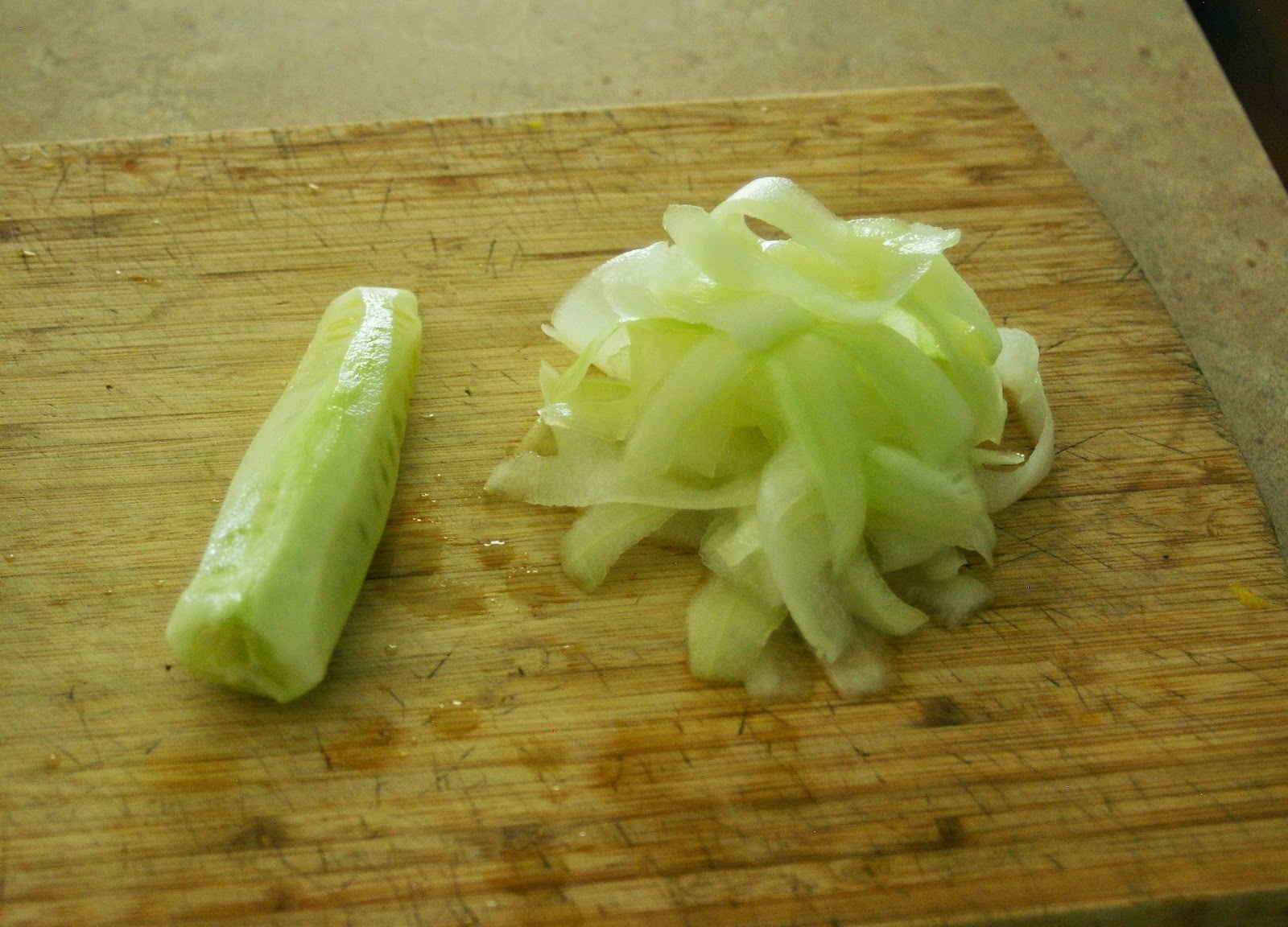
Start by putting on water to boil the noodles and cook the eggs (if you've got time, you can use the same pot and do the eggs after the noodles). While the water is heating up, peel your cucumber or squash. They're both very tasty here, and bulk out the noodles with cool fresh flavor. If you've got a spiral slicer or julienne peeler, good for you. You know what to do, so go to town. Otherwise, use your vegetable peeler to peel thin slices off of the cucumber or squash until you get down to the seeds. If you prefer, you can slice these strips thinner to blend in with the noodles more.

Once the noodles are cooked, make sure to run cool water through them until chilled. Toss the noodles and cucumber/squash in the sauce until well coated. Divide up into bowls and toss with a handful of greens, then top with an egg.


Peanut Sauce

vegan, gluten-free depending on your soy sauce
makes about 1 cup of sauce
  • ¼ c. peanut butter (Mine is creamy, natural & salted. Yours will work too, but you might have to add more or less stuff)
  • 1-2 Tblsp. sugar
  • 1 clove garlic, minced
  • 1 tsp. minced fresh ginger
  • ½-1 tsp. thick chili-garlic sauce like Sriracha or sambal oelek
  • (or more, to taste)
  • 2 Tblsp. soy sauce
  • ¼- c. water
Add all ingredients except water. Add water a tablespoon or so at a time, stirring until thoroughly combined before adding more water. If you add too much water at once, the suspension will break and you'll get weird thready peanut-butter bits in seasoned water. If this happens, add a little more peanut butter and stir until smooth. You'll have to add more water later. Adjust seasoning as necessary.

Monday, July 8, 2013

Jamaica Jerk Cooler: Hibiscus, Watermelon & Heat!

In Spanish, the hibiscus flower is commonly known as flor de Jamaica or rosa de Jamaica (sometimes just jamaica) but a somewhat less common name for it is rosa de Abisinia. It's interesting that two names for the same plant would reference two different places, especially places that are connected in other ways. Abisinia, rendered in English as Abyssinia, is an older name for the territory that is now Ethiopia. There are several cultural connections between this part of Africa and Jamaica, but none so significant as Rastafarianism, the Jamaican-based, Ethiopian-focused religion. While most people's first associations with Rastafarianism involve dreadlocks and weed, the underlying theology of the faith is rooted in a belief in a deep connection between Jamaica and Ethiopia. Drawing heavily from the biblical stories of the Jewish exodus from slavery, Rastafarians seek to eschew the trappings of "Babylon" (interpreted as the forces of modern imperialism) and see Ethiopia as the homeland to which they will return, and Haile Selassie (Ras Tafari), Emperor of Ethiopia from 1930-1974, as a messianic figure. I don't know how old the Spanish names for hibiscus are, but they almost certainly predate the beginnings of Rastafarianism in the 1930s, which makes the connection all the more interesting.

Interesting connections aside, hibiscus tea makes a fabulous summer drink, crisply tart and refreshing with a striking ruby hue. Known in Spanish as agua de jamaica, it is one of several classic aguas frescas with roots in Mexico. Lightly sweet coolers that go a ways toward quenching both thirst and heat, other common aguas frescas include sweet, tangy tamarindo (tamarind), creamy horchata (a sweet rice milk with cinnamon), and smooth sandía (watermelon).

So with all this talk of Jamaica, Ethiopia and Mexico, on to July 4th. This July 4th was a blast. We took a little road trip to Cambridge for my friend Meaghan's South Pacific tiki-themed party, complete with pig on a spit (here's Neko in position under the serving table, watching the ground hopefully). Although, interestingly, it was hotter in Cambridge than in Honolulu that day, by about 10°. Meaghan, whom I play music with, is one of two the proprietresses of Booze Époque, a Cambridge-based mobile cocktail magic outfit (always a good friend to have). Meaghan and her BÉ collaborator, Harmony, created a number of delicious concoctions for the party (with and without booze), they also held a tiki drink contest. Contestants concocted their own summery drink with the requirement that it include at least one local ingredient. Among a number of interesting and tasty entries, I am honored to say my Jamaica Jerk Cooler ended up taking the grand prize Cthulhu-on-vacation tiki sculpture.

As I've said before, my family's recipe secret is that we don't keep secrets about recipes, so here's how you make it. The drink takes advantage of good lessons learned from aguas frescas, combining hibiscus and watermelon juice with a syrup made with honey and steeped with spices you might find in a jerk marinade - allspice, cinnamon and chipotle pepper (in most jerk spice mixes, this would be Scotch Bonnet peppers, but I wanted the smokiness of the chipotle here). It is also good with a little gin in it, but it's delicious without as well.

Jamaica Jerk Cooler

    Makes about 3 quarts
  • 1 ½ c. dried hibiscus flowers
  • 2 qts water
  • 1 qt watermelon juice (I'll go into more detail below about how much watermelon you need for this much juice)
  • 2 c. honey jerk syrup, below
  • lime wedges
  • gin (1 oz. per serving or about 1½ c. for whole recipe)

  • Honey Jerk Syrup
  • 3-4 whole chipotle peppers, not in sauce
  • 2 Tblsp. whole allspice
  • 4 cinnamon sticks
  • 1 c. water
  • 1 c. honey
Start with the syrup: bring the water and spices up to a boil in a small saucepan, turn heat down to a simmer for about 5 minutes, then turn off heat and allow to steep for at least an hour. Strain out spices, then return liquid to saucepan. Add honey and warm until the honey combines totally with the spicy liquid. Set aside/chill. I had a little trouble finding whole chipotles (smoke-dried jalapeños) outside of adobo. Apparently, my local coop only has chipotle powder now.

Next, make the hibiscus tea. Put 1 quart of water and the dried hibiscus into a saucepan. Bring to a boil, then turn off heat and let steep for about an hour. Strain and add the remaining quart of water.

As far as the watermelon juice, I started with a melon weighing about 10 lbs and ended up with about 10 cups of juice: what you see at right, plus another quart. I'm enjoying having the extra watermelon juice around (see below), but you probably only need about 6 cups of cut up watermelon to get a quart of juice. To juice the watermelon, cut it off the rind and put it in a blender or food processor. Blend for a few minutes, until there are no visible chunks. Pour through a fine mesh sieve and press through with a spatula or spoon. True to its name, watermelon is primarily water, and what you see in the mason jar at right is all the pulp left from the entire 10 pound watermelon. There's about a cup of it, relative to the 10 cups of juice, and it's great to eat chilled, with a spoon when it's really hot out.

If you plan to make this punch alcoholic, add about 1½ cups of gin to the total (or to taste). You can also mix it by the serving, adding about 1 oz. of gin to 8 oz. of punch. With or without alcohol, serve each cup with one or more lime wedges.

On using up the Watermelon

Making watermelon juice is a great way of reclaiming the fridge space taken by a languishing piece of melon. I've been having fun playing with watermelon juice this summer. It's a great base for all kinds of drinks. One of my favorite cool down drinks right now is a cup of watermelon juice, half a lime and a can (12 oz.) of seltzer. It pairs really well with citrus, mint, and many other fruits.

Additionally, for extra points in not wasting ingredients, here's my recipe for watermelon rind pickles.

Wednesday, August 15, 2012

Quick Hits: Lentil, Herb & Feta Stuffed Tomatoes

The months of drooling, rhapsodic fantasies about perfectly-ripened field tomatoes have finally given way to a flood of them. It's not an overabundance; that would imply too much. The simple joy of slicing a tomato, sprinkling it with salt and maybe drizzling a little olive oil over it hasn't gotten old yet, but there's so much more to do with tomatoes before you even get to cooking them. I tossed together this fresh-stuffed tomato using some left over odds and ends recently and was so excited about it that I had to recreate it and write it down to share.

The dish is built around a protein-rich lentil and grain stuffing, simply flavored with a healthy handful of fresh herbs, a little feta, and the guts of the scooped-out tomato. It may look like a salad, but it eats like a meal.

Wednesday, July 25, 2012

Swordfish with Peach-Corn Salsa


My CSA keeps me sane in the summer: it helps keep my miserly urges from denying me fresh vegetables and jump starts my culinary creativity in a couple different ways. Not only does the seasonality lead me into the diverse options for familiar vegetables, but it also forces me to try out vegetables I'm less familiar with (see the last post, a study of kohlrabi). This has worked really well for the last few yeas, and both my miserly urges and desire for a varied palate are satisfied.

This year, the farm down the road where I have a share became a pickup location for Cape Cod Fish Share. The fish share does the same things that the vegetable share does for me as regards creativity and circumventing the miserly urges, but also answers many of the sourcing and sustainability questions that keep me from buying fish regularly.

Wednesday, July 18, 2012

The Kohlrabi: Spherical, but quite pointy in parts!

What is Sputnik doing in my CSA share?!

One of the best parts of a farm share is the surprises: the chances to meet a new ingredient head on, figure out what makes it tick like a tasty bomb, and eat it up. Kohlrabi is one that I'm still figuring out, and the friends with whom I do farm pickup have been left scratching their heads as well. It's only in the share a once or twice out of the year, and each year has slowly revealed its charms a little more. This year, I think I finally have its number.

CSA-share head-scratch staple kohlrabi, which looks like a more organic version of Sputnik (spherical, but quite pointy in parts!), is part of the largely familiar Brassica oleracea crew, which includes kale, broccoli, cauliflower, Brussels sprouts and cabbage (but not napa cabbage or bok choy, which are Brassica rapa). It's remarkable to think that they're all the same species, but, then again, so are chihuahuas and Irish wolfhounds.

Friday, July 13, 2012

Savory Cantaloupe Salad & Chèvre on Anadama Bread

Perfectly ripe cantaloupe almost seems beyond improvement: the deep, musky perfume hits you even before you sink your teeth into the satiny smooth flesh. It's sweet, but not overwhelmingly so, and has a richness to it uncharacteristic of most fruits.

Sometimes, you just can't help tweaking perfection, though. (Also, not every cantaloupe reaches quite that pinnacle of perfection.)

Sunday, July 1, 2012

Stuffed Grape Leaves

Earlier this week, I put up a post about how to collect and can your own grape leaves. The inevitable follow-up is what to do with those leaves once you have them.

Stuffed grape leaves feature in cuisines from southern Europe to Central Asia, though the most common names dolma and sarma come from Turkish (dolmak, "to stuff"; sarmak, "to wrap") — another testament to the broad, long-lasting impact of the Silk Road. Many of these cultures alternately use the same fillings in cabbage leaves.The fillings vary slightly from place to place, but are typically some combination of a grain, like rice or bulgur, and protein, like ground meat or lentils. From there, fillings diverge widely. Some include vegetables like tomato and zucchini. Others focus on adding dried fruits and nuts. They are served in a range of sauces, the most common being based around tomato, yogurt or lemon.

In the interest of feeding a broad group cheaply, my go-to grape leaf filling is based around rice and red lentils. Lentils and rice are about as cheap as protein gets. I specifically use red lentils, which are available in most supermarkets, because they have a similar cooking time to rice. You can use brown lentils if that's what you have, but you would want to parcook them more than the rice and beyond just a quick soak. I also usually include onion, raisins and mint, and simmer the stuffed leaves in a lemon and olive-oil dressing.

Monday, June 25, 2012

Eating the Bike Path: Grape Leaves


The grape may not be gathered from the birch?
It's all you know the grape, or know the birch.
As a girl gathered from the birch myself
Equally with my weight in grapes, one autumn,
I ought to know what tree the grape is fruit of.

—Robert Frost, "Wild Grapes"

The idea of foraging for wild edibles somewhat romantically evokes trekking deep into the wilderness, but the reality is both more and less romantic: edibles are all around. They are in your backyard, in the park and even growing up through the cracks in the street (which, though tenaciously lovely, you probably don't want to eat). My favorite place to gather wild edibles is the Manhan Rail Trail here in Easthampton. Within a half-mile stretch, you can find chicory, garlic mustard greens, dandelion, blackberries, lamb's quarters, pokeweed, japanese knotweed and grape leaves. There's probably more that I can't readily identify, too. These vary in how accessible they are to eat: blackberries and garlic mustard greens can be eaten on the spot, while pokeweed must be picked very young and boiled (I haven't gotten to eating this one yet, but I have harvested its berries for dyeing purposes). Many of these plants thrive in sunny roadside environments, but best foraging practices recommend collecting edibles at least 20 and preferably 100 feet away from the road. This is what's beautiful about the bike path: it has all of the sunny growing and easy-access benefits of the roadside, but without the exhaust fumes.

Sunday, May 20, 2012

Forget Spring Rolls: Summer Rolls

I've been suffering urges to eat live green things by the fistful recently. There's something about the onset of hot weather and the boisterous upspringing of plants that makes me want to rip off their tender little leaves and eat them like a hungry, hungry beast. It's like I'm trying to cram in all of the fresh air and sunlight they've absorbed. I am eating plants the way some ancient warriors consumed the heart of their enemy: to gain their strength and wisdom. There's a Philip K. Dick short story, "Piper in the Woods", in which people, suddenly craving a simpler life, start claiming that they have become plants. There's a certain appeal to it: what if sitting still, smiling at the sun all day fulfilled all of your needs? In the absence of that, or, rather, the presence of all the other things that must be done, or that I do anyway, I try to steal the essence of leafy plants. By serenely dismembering and eating them.

Vietnamese gỏi cuốn, literally, "salad rolls" but also known as summer rolls or Vietnamese spring rolls, combine fragrant, leafy herbs, crisp veggies like bean sprouts and thin-cut carrot and cucumber, and a little bit of protein, usually from shrimp or shredded chicken and roll it all up in bánh tráng, rice paper. Not only do they satisfy my unholy cravings for crisp, green crunch, but they also require very little prep and even less time with the stove going, which is always at a premium when it gets hot out. Even more so, they're fun to put together and make dinner into a great group activity.

Friday, September 16, 2011

Quick Hits: Panzanella

We have kind of a unique problem - we have too much artisan bread hanging around on a regular basis. Maybe it sounds a little less whiny if I tell it like it really is: we have too much half-stale artisan bread hanging around. Maria works most of the week as a farmstand muffin and cookie-slinger, but one night a week, she puts on her cape and cowl and takes on her real passion: bread. Every Monday, after working a full shift at the regular baking job, she heads out at 11 o'clock at night to go shape bread at El Jardín, one of a few local bakeries that focus on wood-fired, sourdough bread. She returns, half-delirious, at about 9 o'clock in the morning, often towing several loaves of day-old sourdough, and proceeds to sleep for most of her Tuesday off (and then wakes up in the afternoon and commences cooking again for her weekly pot luck).

Bread, especially sourdough, is kind of a family legacy. We grew up with perpetual sourdough. Mom began baking when pregnant with me, and, for several years, plied her bread at the Brattleboro Farmer's Market out of the back of the 1970s Volvo with her spokesbabies. When I was about 5, she got a job baking in the kitchen at The Putney School, where she was encouraged to further develop her sourdough wiles. We also grew up in the back of that kitchen, warming ourselves against the huge, ceramic-lined ovens and sampling whatever came down the pipeline. As such, we grew up with the idea the sourdough wasn't a big deal. Folks' ability to normalize their childhood is remarkable sometimes. All that said, we only eat so much bread before it becomes almost unslice-ably stale. I guess it's better than it going moldy, with which you can do very little, but we store it at room temperature and not in plastic, which will get you stale over moldy most days. For better or worse, once bread has gone totally stale and lost all its moisture, it really won't go moldy.

So, we end up swimming in stale sourdough, and having to find creative ways to use it up outside of making breadcrumbs in quantities of epic proportion. Leading up to the end of summer, here's a quick favorite: Panzanella, a quick, Italian bread-tomato-basil salad full of simple, fresh, summery flavors that we always have trouble not picking to death before it makes it to its destination (the same can be said of another favorite stale bread usage, a savory bread pudding, but that's a story for another, cooler day).


    Panzanella

    vegan, about 20 min. start to finish
    serves 4-6
  • 1 loaf half-stale bread, large dice
  • 2 med-large tomatoes, large dice
  • 3-4 cloves garlic, slivered
  • ¼-½ c. olive oil
  • 1-2 tsp. salt (this is a good opportunity to break out the good salt)
  • 3-4 stems (15-20 leaves) fresh basil, chiffonaded
  • fresh ground black pepper to taste

  • Optional:
  • 1 chile, seeded and minced
After prep, toss all ingredients save the garlic. Toss garlic in a skillet with some of the olive oil over med-high heat until it starts to smell toasty, then sprinkle on top. Let sit for as long as you can stand it, or at least 15 minutes. Crank black pepper to taste over the top.

Thursday, August 25, 2011

Pasta Ricotta: What Summer Tastes Like

Since the last post didn't contain any actual recipe, here's a quick one to keep you going. I read about this dish years ago at a friend's house in a cookbook that I couldn't pick out of a lineup of Italian cookbooks if my life depended on it at this point. The book's long-winded description of it essentially boiled down to: this is an ideal food to make during a long night of drinking. Its appeal is actually wider than that, though. Its precious few ingredients and simple composition mean that not only can you make it when you're half in the bag, but that each of those few ingredients shine.

Much of New England had a cool, rainy spell at the end of May/beginning of June this year, which means that tomatoes have been a little slow coming in. While we've been picking cherry tomatoes for almost a month now, the big slicers from the farmshare just started coming in last week. Et puis, la déluge: We brought home nearly a dozen big slicing tomatoes this week. The basil's been going strong for a while now, both at the farm and in our specialized home herb planter (right). Finally, they get to come together. The dish is as simple as this: pasta, tomato, basil, garlic, ricotta. It's hard to get closer to the taste of summer without just eating a slice of tomato with a basil leaf on top.

    Pasta Ricotta

    vegetarian
    Serves 2-3

  • ½ lb. pasta, shape of your choice, cooked
  • 1 med-large tomato, large dice (1½-2 c.)
  • 1-1½ c. basil, washed and torn
  • 2-3 cloves garlic, minced
  • drizzle of olive oil
  • 1-1½ c. ricotta
  • salt & pepper to taste

  • A few variations that don't meaningfully increase the amount of effort:
  • Replace all or part of the ricotta with chèvre.
  • Add red pepper flake or sliced fresh hot pepper.
  • Mash a few anchovies in with the garlic.
  • Include toasted, rough chopped pine nuts or walnuts, à la pesto.
  • Toss in a little chopped fresh spinach.
Cook pasta. All other prep can be accomplished while pasta is cooking. Prep tomato, basil and garlic as indicated. Mix those three in a bowl and drizzle with olive oil. When pasta is cooked and drained, empty in to large bowl and add vegetables and ricotta. Toss until combined and add salt and pepper to taste.

Thursday, July 28, 2011

Magenta Lentil Salad OR A Love Note to Slow Absorption Cooking

I have a beet problem. I have trouble resisting the urge to sneak them into all sorts of dishes for the sheer glee of turning them magenta. As far as childish impulses go, you could really do much worse. I love their sweet, earthy flavor, and, in addition to a crazy magenta hue, beets are loaded with nutrients: all kinds of antioxidants, detoxifiers, and anti-inflammatory compounds, not to mention sizeable helpings of folate, potassium and fiber (see here for more on beet nutrition). Also, many of them break down in heat or are in the skin, so my silly, lazy addition of raw, unpeeled, crazy purple beet looks like a solid decision rather than a fun one. You still get crazy fun magenta salad, though.

I've been making it with honey and topping it with chevre, but that's easily changed to make it vegan.

Magenta Lentil Salad
Grain/Gluten-Free, Optionally Vegan

    Biomass:
  • 1 c. brown lentils
  • 1 c. urad dal (whole) ← you can sub green/French lentils for either or both of these
  • 1 small/med. beet, grated
  • 2 cloves garlic, minced
  • 5-6 leaves kale, stemmed and cut into thin ribbons
  • 1 smallish cucumber (5-6"), seeded and cut into ½” cubes
  • 1 scallion, sliced
  • 3-4 sprigs mint (10-15 leaves), minced
  • 1 tsp. salt
    Dressing:
  • 1-2 Tblsp. honey/agave syrup
  • 2 Tblsp. olive oil
  • zest & juice of one lemon
  • ½ jalapeño pepper, seeded & minced (optional)
  • 2-3 tsp. ground cumin
  • 1 tsp. ground black pepper
Cook lentils in separate pots: for each, rinse and add water to cover plus enough to reach to the first knuckle on your index finger for brown, to second knuckle for urad. Cover and bring to a boil. Let the brown lentils boil for about 5 minutes, add ½ tsp salt, then remove from heat. Let the urad dal boil about 15 minutes, add ½ tsp salt then remove from heat. Let sit for at least 45 min. to an hour (you can do this overnight!). You can cook them however you like, but this cooking method helps keep the lentils from over-cooking. In winter dishes, I like cooking my lentils to mush (and usually prefer mushier red lentil or split mung bean), but in summer dishes I like a toothier bean.

Prep veggies and herbs and mix together in a 3 qt or larger bowl. Mix together dressing ingredients in a small bowl. Add dressing and lentils to bowl and toss.

Crumbling in some plain chevre takes it up another level, but it's pretty good without, too.

A little more about Slow Absorption Cooking

I don't know if there's a more official appellation for this cooking method, but "slow absorption" seems to cover it pretty well. The basic principle of it is that you bring a grain or legume to a boil in a covered pot of water, let it boil for a short while, then remove it from the heat and let it coast. It's a fabulous strategy when you're trying to minimize the amount of time the stove is on, but it does require a little more forethought. On the other hand, it requires direct attention for less time. I often set up a pot of lentils or rice right before I go to bed. It's great: I bring it to a boil, turn it off, go to bed and wake up to it perfectly cooked. Sometimes I don't quite know what I'm going to do with it when I start, but there's roughly 210 things to do with a pot of cooked rice, so I don't worry about finding a use for it. You can even make a whole meal this way, but that's a story for another day.

Friday, July 22, 2011

(Almost) Instant Gratification Lettuce Wrap Burrito


At Amundsen-Scott Station in Antarctica, it's -80°F. They expect a high of -53° today. Almost sounds nice; it's 98° in the shade today, here. This means a lot more when you live in a second-floor apartment and are too stubborn to get an AC unit. I realize the price of my stubbornness is that I don't get to whine about it, so here's a short list of what I'm doing instead:
  1. Flauting common modesty conventions
  2. Drinking electric blue lemonade
  3. Star-shaped ice cubes: they make every cold thing better
  4. Wading with the dog (I have yet to resort to her strategy of digging up some cool dirt in a shady spot)
  5. Going to visit air-conditioning
  6. Breaking out the ice-cream maker
  7. Eating food that requires the stove being on as little as possible
It's on this last point that we dwell for now. Summer food for me rotates around my half of CSA share at Mountainview Farm, exactly a mile from my house. Not only am I supporting a local farm and visiting my growing food, but makes really good economical sense. I teach, so I don't get paid in the summer. Paying a nominal amount up front means I don't have to hang around the grocery store or farmers market in August deciding I can't afford fresh vegetables, much less fresh, local ones. The fee amounts to roughly $12/week for the 22 weeks from the beginning of June through the beginning of October, for a crazy quantity of tasty veggies, responsibly grown locally. It does behoove me to get creative in order to make the most of what's there, though.
The good news is that vegetables like this like to speak for themselves. Lightly sauteed summer squash and sweet onion mixed with black beans, rice and umami-rich yeast spread wrapped in fresh lettuce leaves.

(Almost) Instant Gratification Lettuce Wrap Burrito
(vegan, gluten-free)

Serves 2 hungry people or 3-4 not so hungry folks
    Biomass:
  • 1 med. or 1/2 large zucchini (normal large, not New England large)
  • 1 med. or 1/2 large fresh onion
  • 1-2 tsp olive oil
  • 1 Tblsp Magical Spice Blend
  • 1 tsp salt
  • 1-2 cloves garlic, minced
  • 1 15-oz. can black beans, drained and rinsed

  • 1½ c. cooked rice (1/2 c. dry), cold, leftover rice is fine, if not better

  • 10-15 lettuce leaves
Slice onion into moderate julienne (¼" thick). Cut zucchini into sticks about ¼" thick and 2" long. Heat a heavy skillet on high almost to smoking. Add olive oil, then onion. Keep it moving for 5-10 sec. then stir/toss occasionally over the next minute or so. Add about half the garlic and the zucchini. Sprinkle with salt and spice blend. Stir/toss occasionally for the next minute or two. Add the rinsed beans and the rest of the garlic. Stir it up, then turn it off. I mixed up about ¾ c. each of rice and the veggies & beans and a big spoonful (maybe a tablespoon) of tasty yeasty goo (see below), and sat down with that and a head of lettuce. I ripped the leaves right off, spooned a generous helping of filling on and wrapped it like a burrito: folded up the top of the leaf, then the sides and ate it stem first without dumping its cargo all over the plate. So simple, so summery and so satisfying. And the damn stove didn't have to be on for more than five minutes. I also made a version of this with leftover rotisserie chicken in place of the beans which I can also heartily recommend.

Tasty Yeasty Goo

The savory flavor of nutritional yeast, believe it or not, reminds me of being a little kid and dumping it on all sorts of things: popcorn, broccoli, pasta. To this day, a plate of spaghetti with nutritional yeast, butter and soy sauce is enough to send my inner 8 year old into joyous rapture and popcorn isn't popcorn without it. Later on, I found I wasn't the only person who flipped out over the stuff that way. A sauce similar to this one forms the basis of many good vegan mac n' cheese recipes, and like many good alternatives to something else, it's disappointing if you expect it to taste exactly the same, but pretty damn tasty in its own right. Also, it'll keep well in the fridge for at least a week, maybe more. A batch has yet to last long enough to find out.
    Mix together until smooth:
  • 1/4 c. nutritional yeast
  • 1 Tblsp soy sauce
  • 1½ tsp. Mustard (I used Trader Joe's yellow mustard - you may want to adjust this if you're using a stronger-tasting mustard)
  • 1 Tblsp tahini
  • 1 Tblsp water

LinkWithin

Related Posts Plugin for WordPress, Blogger...