Showing posts with label easy. Show all posts

Friday, May 23, 2014

Don't Step on the Grass...

But no, not that grass in the lawn. And, no, not that either.

You may know it as asparagus, but come mid-May around here, it's simply grass. Hadley grass, to be specific. Hadley, on the rich floodplains just across the Connecticut River and hair north of here, is world-renowned for its asparagus. Or at least it was, up until the 1970s, when a soil-borne fungus more than literally decimated Hadley's asparagus production. In the decades leading up to that, Hadley farmers would pick and prepare up to 50 tons of asparagus each day of the fleetingly brief few weeks of the season. Hadley grass reportedly turned up in chic European restaurants and even at springtime feasts held by the Queen of England.

Although local asparagus production doesn't take on the epic proportions it did forty years ago, there are still a handful of asparagus farmers in full-scale production and many backyard growers with extra to sell. The town still takes pride in this element of its history, honoring the tender green spears with a major community festival and, I kid you not, an ice cream flavor. And, as it's an ingredient where freshness is especially rewarded, it's still worth trawling the back roads in Hadley and the surrounding towns this time of year for hand-written signs that simply read "Grass." Or, if you're me, quietly coveting the asparagus in the adjacent community garden plot and settling for taking many pictures of it and then buying a bunch from the stand just up the hill.

So, why simply grass? One variant, based on a folk etymology of the word, dating back to the 17th century, was sparrowgrass. The name held on until late in the 1800s, and, according to a 1791 pronunciation dictionary, calling it "asparagus" implied "an air of stiffness and pedantry." I can't say for certain why it stuck around here, but even aside from a desire to avoid stiffness and pedantry, it was grown in sufficient volume that it was almost as common as that grass in the lawn.

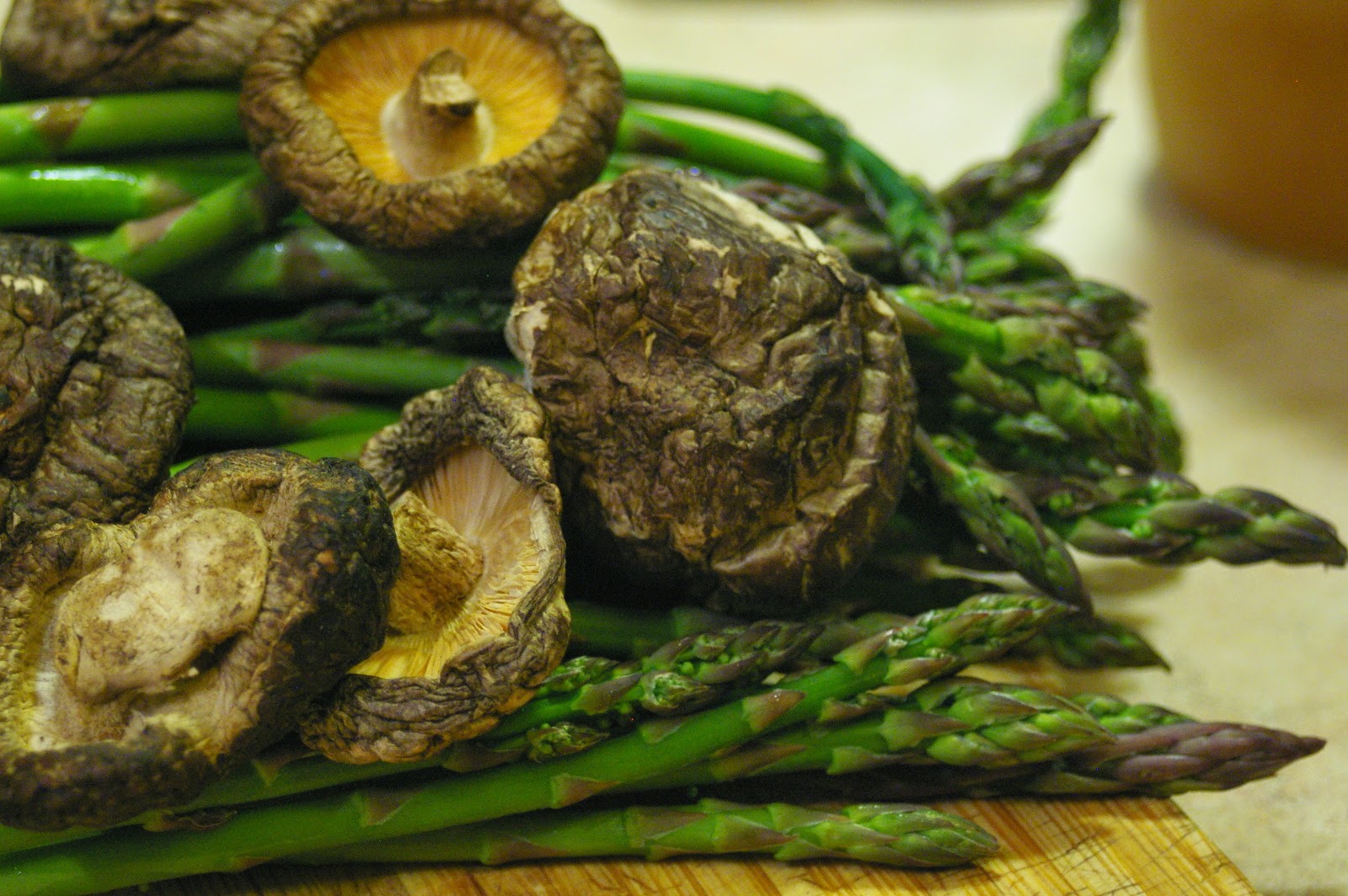
Asparagus being as versatile as it is and asparagus season being as fleeting as it is, I've been chowing through it every which way since the first local asparagus came in about two weeks ago. I was thinking of writing about asparagus and chèvre risotto or lemony shaved asparagus salad, but today's cool, rainy weather put me in a soup mood so I put together a creamy, smooth asparagus soup, accented with dried shiitake mushroom and white wine and topped with the asparagus tips, toasted with slivered garlic.

Creamy Asparagus-Mushroom Soup

gluten/grain-free, optionally vegetarian
  • 1 lb. asparagus
  • 1 onion, small dice
  • 4 cloves garlic
  • 6-8 dried shiitake mushrooms
  • 1 Tablespoon butter
  • 1 teaspoon olive oil
  • 2 teaspoons salt
  • 1¼ c. dry white wine
  • ½ c. cream
  • 2 c. chicken or veggie broth
You have two options with the dried shiitakes: you can grind them up and add them as a powder, or you can simmer them in the stock until they're soft enough to blend. If you're simmering them in stock, start that first. Break up the mushrooms coarsely with your hands and put them in a small saucepan with the broth and bring up to heat over medium-high heat. The mushrooms will need to simmer for at least 15-20 minutes to soften. If grinding them up, run them through a spice grinder until fine and set aside.

Dice onion. Melt butter with olive oil in a large saucepan over medium-low heat, then add onion, stirring occasionally. Meanwhile, peel and mince two cloves of garlic and prep the asparagus. Snap off both ends of the asparagus (this is a good job for earnest helpers of all ages and abilities). If you're running short on time, you can cut off the top and bottom inch of the spears in one fell swoop. Scrap the cut ends, but put the tips aside to put on top later. Cut the stalks into pieces about an inch long.

Once the onion has started to get clear and soft, add the garlic, salt and asparagus. Stir until the garlic gets fragrant, then add a cup of wine. If simmering mushrooms, add the mushrooms and broth, too. If using ground mushrooms, whisk with the stock and add to the pot with the asparagus. Let simmer until the asparagus is soft, 10-15 minutes, add the cream and remaining wine, then blend until smooth.

Sliver the other two cloves of garlic and saute in a little olive oil with the asparagus tips and salt and pepper. Serve soup with garlicky asparagus tips on top.

Wednesday, November 7, 2012

Butternut, Coconut, Curry-nut?

Apparently, this has turned into the squash blog. Realizing this would be my third subsequent squash post, I almost posted about something else. However, the following things occurred to me:
  1. These are three quite different squash recipes, illustrating the versatility of the vegetable.
  2. Who would come here who doesn't want to hear more about squash‽
In my last post about squash-filled profiterole, I went on, possibly at too great a length, about why roasting a bunch of squash and keeping it in your fridge is a fabulous idea. I won't repeat myself, but it is; consider this recipe Exhibit B in the case. A rich, satisfying dish that balances sweet and savory, this contains a complete protein when you add rice and happens to be vegan, gluten-free and nut-free (the coconut, despite its name, does not affect those with tree-nut allergies).

As long as you already have roasted squash, this curry comes together in no time flat - about 20 minutes at the outside. Although I sometimes recommend forgetting to start the rice until well into cooking a dish to give you an incentive to let something simmer longer, this is a dish where you want to make sure to start the rice ahead of the other dish so you won't end up waiting on the rice.

I used a smallish (probably 2-3 lb) butternut squash for this dish, but other varieties of winter squash will also work. To roast squash, halve it, scoop out the seeds and place on a lightly oiled (foiled if you don't want to scrub) baking sheet. Bake at 375° for 35-60 minutes. Check at 30 minutes and poke the squash at its thickest part, then estimate how much longer until it's tender or check every 5-10 minutes.

Squash, Coconut & Chickpea Curry

vegan, gluten-free, nut-free
Takes about 20 minutes, serves 3-4
  • about 2 lb winter squash, roasted and cut into 1" cubes
  • 1 onion
  • 3 cloves garlic
  • 1 tsp brown mustard seed
  • ½ tsp. fenugreek seed
  • 1 tsp. cumin seed
  • ½ tsp. turmeric
  • ½ tsp. coriander
  • ½-1 tsp. red pepper flakes
  • ½-1 tsp. salt
  • 1 15 oz. can chick peas, drained
  • 1 can coconut milk
In large, heavy bottomed pot, heat a few teaspoons of veg. oil over high heat. Add mustard, fenugreek, cumin and coriander. Once the seeds start to sizzle and pop, add the garlic and onion. Once onion has started to soften and brown a bit, add chick peas, turmeric, red pepper and salt. Toss, then add squash and coconut milk. The squash will start to break down and blend into the coconut milk, making for thick, saucy goodness. The squash shouldn't totally dissolve and dissappear, though.

Simmer for a few minutes, adjust seasoning and serve over rice. Cilantro is also nice addition right at the end, too.

Monday, October 8, 2012

Quick Hits: Chile-Lime Winter Squash/Sweet Potato

It's that time of year where I fall in love with my favorite orange vegetables again - winter squash and sweet potato. Last year, my CSA farm's winter squash crop was drowned by Hurricane Irene. This picture to the right was taken in the squash field. From a kayak. The squash are under about 12 feet of Connecticut River.
They did find their princess in another castle, though, taking in their best sweet potato crop ever from a field a little farther away from the river. In many recipes, this one included, the two are interchangeable. They have very similar nutritional profiles, as well. They're both extremely high in Vitamin A (as are most orange vegetables) and very good sources of Vitamins C, B6, potassium and fiber.

This simple but striking presentation, dressed in sweet, tart and spicy, works equally well for either. Butternut squash is an excellent choice for a dish like this; it's fleshy and its thin skin means it doesn't need to be peeled, just well washed, before being cubed and roasted. Delicata's another good sweet, thin-skinned variety but have a lower flesh-to-seed ratio than butternut. You can eat the rind of any squash, but with many of the thicker-skinned squashes, like buttercup/kabocha, pumpkin or hubbard, you don't want to.

Chile-Lime Squash/Sweet Potato

vegan, gluten/grain-free
done in about 30 minutes, serves 4 as a side
  • 1 large butternut squash, cut to bite-sized wedges
  • or
  • 2 medium sweet potatoes, cut into bite-sized pieces
  • 2-3 Tblsp. olive oil
  • ½ tsp salt
  • 1 tsp cumin
  • 1 tsp cinnamon

  • Dressing:

  • 1-2 T honey
  • zest & juice of one lime
  • ¼-½ tsp. ground chipotle pepper
  • or
  • 1-2 canned chipotles, minced
  • or
  • 1 small red chile, minced
  • some fresh cilantro (optional), roughly chopped

Toss squash with olive oil, spread on sheet pan and sprinkle with salt, cumin, cinnamon. Bake at 450°F for about 25 minutes, turning once. Remove from oven and toss with dressing and cilantro

Saturday, September 29, 2012

Quick Hits: Herb Garlic Parmesan Potato Wedges

A sure sign of fall: potatoes are back! Boil 'em, mash 'em, stick 'em in a stew! Perhaps the biggest source of the potato's meteoric rise to culinary ubiquity in Europe has to do with how little need be added to reach being comfort food: little more than heat, salt and maybe butter. You can definitely add more (see last fall's breakdown of Potato Gnocchi with Leek, Kale & Sage Butter), but, as demonstrated by the recent excitement about Waffle-Iron Hashbrowns, the spud requires little help past heat.

Here, cheese and garlic help play up the warm, toasty potato goodness, adding a flavorful crustiness to a simple roasted spud.

Herb Garlic Parmesan Potato Wedges

vegetarian, gluten/grain-free
serves 4-5, about 30 minutes, start to finish
  • 3 lbs potatoes (red ones are nice, but not essential)
  • 2 T olive oil
  • 1 tsp salt
  • Topping:

  • 4-5 cloves garlic, minced
  • 6-10 sprigs thyme (or about 3-4 T)
  • fresh ground black pepper
  • ¼ c. grated parmesan cheese
Preheat oven to 450°F.

Cut potatoes into wedges (6-8 per spud) and toss with olive oil. Spread on sheet pan and sprinkle with salt and pepper. Bake wedges for 10-15 min.

While wedges are roasting, mince garlic and mix with other topping ingredients. Turn potato wedges, sprinkle with topping, and return to oven for about 5 minutes.

Sunday, September 23, 2012

Mole Gringo, with only a dozen(ish) ingredients

Reading about traditional moles makes me feel like a total poser, but it also makes me hungry. My students are currently reading What the Moon Saw, a thinly veiled ethnography of a rural village in the southern Mexican state of Oaxaca, for another one of their classes. I snagged it to read one day last week in the name of integrated curriculum and devoured it more or less in one sitting, give or take snacks. Oh, YF books, you go down so smooth. It is also a fairly good coming-of-age story about a teenage girl from the burbs of DC meeting her Mexican grandparents for the first time, finding out her grandmother is a curandera (shamanistic healer), and falling for a local boy who sings revolutionary songs real pretty. Moles, though never mentioned by that name are, along with hot chocolate and corn tortillas, essential to the story. In one of her grandmother's stories, a friend recalls a situation in which she planned on killing herself, but decided to make chicken with chocolate-chile sauce as a final meal and decided life was worth it after all. Mole proved to be her reason to keep living.

The word mole comes from a Nahuatl word, molli, which simply means "sauce," though it lines up interestingly with the direct-from-Latin Spanish verb moler, "to grind," an essential process in making mole. Nahuatl, a group of
languages from across southern Mexico, is the source for a surprising number of English words: chocolate, avocado, guacamole, tamale, chili, coyote, and tomato are all of Nahuatl origin, filtered through Spanish. Seeing as the term of origin is as broad as it is, it's unsurprising that there are a wide variety of moles across southern Mexico. They vary in complexity and focus, but have a few things in common: all begin with a variety of chiles, and from there are built out of spices and ingredients that make it sweet, like dried fruit; sour, like tomato or tomatillo; and thick, like nuts, seeds and starch. Oaxaca, where the book takes place, is known in some circles as the "Land of Seven Moles" but it's much broader than that - think of the seven moles a little like the five classic French mother sauces. They're more like guidelines. The most complex of these moles have nearly 40 different ingredients and can take days to make, so it's easy to see where folks might be overwhelmed by the idea of making it on their own for anything short of something very special, and miss out on the joys still available from a simplified mole.

LinkWithin

Related Posts Plugin for WordPress, Blogger...