Showing posts with label rainy day. Show all posts

Friday, May 23, 2014

Don't Step on the Grass...

But no, not that grass in the lawn. And, no, not that either.

You may know it as asparagus, but come mid-May around here, it's simply grass. Hadley grass, to be specific. Hadley, on the rich floodplains just across the Connecticut River and hair north of here, is world-renowned for its asparagus. Or at least it was, up until the 1970s, when a soil-borne fungus more than literally decimated Hadley's asparagus production. In the decades leading up to that, Hadley farmers would pick and prepare up to 50 tons of asparagus each day of the fleetingly brief few weeks of the season. Hadley grass reportedly turned up in chic European restaurants and even at springtime feasts held by the Queen of England.

Although local asparagus production doesn't take on the epic proportions it did forty years ago, there are still a handful of asparagus farmers in full-scale production and many backyard growers with extra to sell. The town still takes pride in this element of its history, honoring the tender green spears with a major community festival and, I kid you not, an ice cream flavor. And, as it's an ingredient where freshness is especially rewarded, it's still worth trawling the back roads in Hadley and the surrounding towns this time of year for hand-written signs that simply read "Grass." Or, if you're me, quietly coveting the asparagus in the adjacent community garden plot and settling for taking many pictures of it and then buying a bunch from the stand just up the hill.

So, why simply grass? One variant, based on a folk etymology of the word, dating back to the 17th century, was sparrowgrass. The name held on until late in the 1800s, and, according to a 1791 pronunciation dictionary, calling it "asparagus" implied "an air of stiffness and pedantry." I can't say for certain why it stuck around here, but even aside from a desire to avoid stiffness and pedantry, it was grown in sufficient volume that it was almost as common as that grass in the lawn.

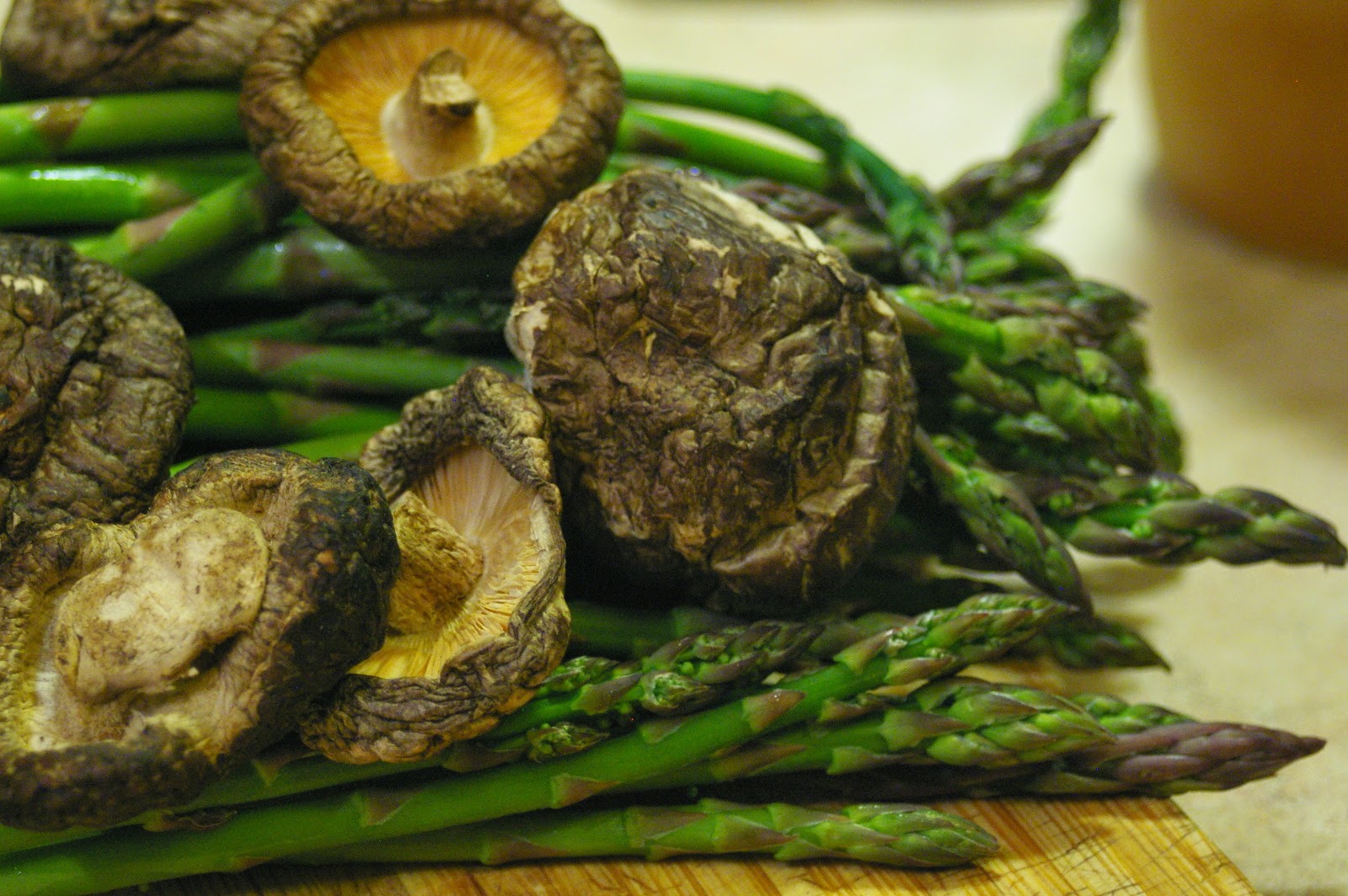
Asparagus being as versatile as it is and asparagus season being as fleeting as it is, I've been chowing through it every which way since the first local asparagus came in about two weeks ago. I was thinking of writing about asparagus and chèvre risotto or lemony shaved asparagus salad, but today's cool, rainy weather put me in a soup mood so I put together a creamy, smooth asparagus soup, accented with dried shiitake mushroom and white wine and topped with the asparagus tips, toasted with slivered garlic.

Creamy Asparagus-Mushroom Soup

gluten/grain-free, optionally vegetarian
  • 1 lb. asparagus
  • 1 onion, small dice
  • 4 cloves garlic
  • 6-8 dried shiitake mushrooms
  • 1 Tablespoon butter
  • 1 teaspoon olive oil
  • 2 teaspoons salt
  • 1¼ c. dry white wine
  • ½ c. cream
  • 2 c. chicken or veggie broth
You have two options with the dried shiitakes: you can grind them up and add them as a powder, or you can simmer them in the stock until they're soft enough to blend. If you're simmering them in stock, start that first. Break up the mushrooms coarsely with your hands and put them in a small saucepan with the broth and bring up to heat over medium-high heat. The mushrooms will need to simmer for at least 15-20 minutes to soften. If grinding them up, run them through a spice grinder until fine and set aside.

Dice onion. Melt butter with olive oil in a large saucepan over medium-low heat, then add onion, stirring occasionally. Meanwhile, peel and mince two cloves of garlic and prep the asparagus. Snap off both ends of the asparagus (this is a good job for earnest helpers of all ages and abilities). If you're running short on time, you can cut off the top and bottom inch of the spears in one fell swoop. Scrap the cut ends, but put the tips aside to put on top later. Cut the stalks into pieces about an inch long.

Once the onion has started to get clear and soft, add the garlic, salt and asparagus. Stir until the garlic gets fragrant, then add a cup of wine. If simmering mushrooms, add the mushrooms and broth, too. If using ground mushrooms, whisk with the stock and add to the pot with the asparagus. Let simmer until the asparagus is soft, 10-15 minutes, add the cream and remaining wine, then blend until smooth.

Sliver the other two cloves of garlic and saute in a little olive oil with the asparagus tips and salt and pepper. Serve soup with garlicky asparagus tips on top.

Sunday, April 13, 2014

Tortilla Soup: Great Sick Food or Greatest Sick Food?

In 2000, Dr. Stephen Rennard of the University of Nebraska set out to design a study to examine if and how chicken soup might actually help people suffering from the common cold. In the study he started with his wife's recipe, handed down from her Lithuanian grandmother. Results from Rennard's study suggested that chicken soup may actually help fight colds by inhibiting the movement of a particular type of white blood cell that defends against infection. Rennard's team (and other scientists who have replicated the study since then) found similar results with other chicken soup recipes as well, though they couldn't identify which ingredients were key to the soup's immuno-supportive qualities. You can see Dr. Rennard's article, Grandma's recipe and some adorable pictures of him and his wife cooking soup together at the University of Nebraska Med. Center website.

When I ended up with a cold a couple weeks ago, I had very little energy, a fridge full of forlorn, half-eaten rotisserie chickens, and a craving for spicy food. There are always a few roast chickens languishing in the fridge; most weeks, Tom takes full advantage of the Friday two for $10 deal on them at the local supermarket, eats the breast (at least most of it) and then leaves them in the fridge. I'm not too big into plain roast chicken, but I hate letting something like that go to waste (my generalized guilt about wasting food is multiplied when an animal died to become that food), so I am constantly trying to find ways to sneak this leftover chicken into things. In this case, spicy chicken soup provided the answer to all of these queries.

I used tortilla soup, a chile-spiked, chicken-based soup with origins across Mexico, as a jumping off point. I spent a while curled under a blanket with a box of tissues and the laptop reading many recipes for inspiration. This recipe might take a little while, but it's one where there's not a whole lot of active time, which means there's time to stop and take a nap between steps. You may not have all of the ingredients that I did (nor the plague of half-eaten chickens) so for many of the ingredients here, I provide a few alternatives.

In the end, what I came up with was good enough to eat for several more days without getting bored and to make again even when I wasn't sick.

Chile Chicken Soup

gluten-free, dairy-free, optionally grain-free

    Ingredients:

  • 2 half-eaten rotisserie chickens (You can use 1-2 lbs of fresh/frozen chicken and simmer in 2-3 qts of chicken stock instead of water)
  • water to cover (3-4 qts)
  • 2 tsp. light-flavored oil
  • 2 small-medium onions
  • 8 cloves garlic
  • 6 Dried Anaheim chiles, toasted* (or about ¼c. paprika, see note about chiles)
  • 2 chipotle chile (or 1-2 tsp. chipotle powder, scaled to taste, or ½-1 tsp. cayenne)
  • 2 tsp. ground cumin
  • 2-3 bell peppers, fire-roasted (I used a combo of red bell and cubanelle)
  • 1/2 can crushed tomatoes
  • salt to taste
  • handful cilantro
  • 2 T masa harina made into a slurry with about 1/4 cup water, stirred in close to the end (optional, adds body)
*About Chiles I used California Anaheim and chipotle peppers. California Anaheims are milder than the already fairly mild New Mexico Anaheims. I buy them in a big bag as "California Chiles" at my local international market. They add a lot of rich chile flavor with virtually no heat. That's (part of) what the chipotles are there for. Chipotles are smoke-dried jalapeño peppers and add both heat and a rich, smoky flavor. I'd actually prefer to use a blend of these with dried pasilla chiles (also called chile negro), which are somewhat spicy and have a slightly darker flavor, but I didn't have any on hand. Anchos (dried poblanos) would also be good here. Additionally, you can replace these with about ¼ cup sweet paprika and about ½ tsp. of cayenne.

    Topping suggestions:

  • tortilla chips (if you want to be fancy, fry your own tortilla strips)
  • avocado
  • lime
  • more cilantro
  • sour cream
  • shredded jack, cheddar or queso blanco cheese
  • chili sauce

Before we get started, let me introduce you to my spice grinder. This is one of my best friends in the kitchen. It's not that I'm a fresh-ground spice purist (I'm not), it just allows for so many more options: getting to make chili powder out of whichever dried peppers I like, pulverizing the dried shiitake mushrooms I like sneaking in all over the place, not having to buy both whole and ground versions of spices I use in both forms. Yes, it does say über super coffee grinder on the side. You can buy devices labeled "spice grinders" but many comparisons I've seen say you're better off with a small, blade-driver electric coffee grinder unless you are regularly grinding very large quantities. Additionally, little coffee grinders are cheap. You can reliably buy them new for under $20, commonly find them at thrift stores or tag sales for <$5, and sometimes find them for free at the dump swap shop, if you are lucky enough to have such a thing, or from someone who is moving, giving up coffee, or getting rid of it for some other reason. I used to have two, one for coffee and one for spices, but the one which had served as spice grinder for nearly a decade gave up the ghost this winter, so the coffee grinder got promoted.

On to soup, though. If you're using leftover roasted chicken(s), break apart chicken carcasses just enough so they fit in stockpot well. Leave any remaining meat intact. Add any languishing veggies (got half an onion? some sad, floppy carrots? half a shriveled beet? throw them in!). Add water to cover, simmer for 1 hour, let sit for 1 hour, then pick the meat off of the bones (it will fall off). I find that with 4 quarts of water, I end up with about 2½ quarts of stock with the evaporation that happens. Sometimes I cook the stock down a little further. If you are using fresh meat, pour about 2 qts of stock over 1-2 lbs chicken and simmer for about an hour and sit for about an hour. Either way, strain the chicken over a bowl shred the meat with your fingers or with two forks if it's too hot to handle. Add the chicken to the reserved stock or the other way around, whichever fits better, to use the stockpot to get the next part ready.

Next, roast the sweet peppers. If you have a gas range, you can put the peppers right on the burner grate over a medium flame and turn every minute or so until the outside is blistered, peeling a little, and has some lovely blackening on the skin all around. Then, place them in a covered dish so they can finish steaming from within. If you have an electric range, you can check out some of the suggestions offered here. You can also elect to simply chop up your peppers and cook them with the onions and garlic, but roasting them brings out their sweetness and adds the depth that only light charring can bring.

Dice the onions, slice the garlic, cook in light-flavored oil in stock pot over med-low heat, stirring frequently until well-browned and tasty smelling. Add non-chile spices to onion/garlic and stir until fragrant. Take a handful of cilantro, cut (but keep!) the stems. Finely chop the stems and roughly chop the leaves, then add to the onions, garlic and spices, then return chicken + broth to pot.

If using whole chiles, toast them over the stove as well. Either grab them with tongs one at a time and wave them over the flame until they get fragrant and a little puffed or toss them in a dry cast-iron skillet over medium-low heat until a similar effect is achieved. Tear them up, remove the stems and grind. I can only fit one or two in my grinder at a time, so it takes a few batches. I just dump them right into the pot as they come out.

Take stems & seeds out of the sweet peppers, if you didn't add them with the onions and garlic. Either chop them finely or run them through food processor. Add chopped peppers and crushed tomato to soup. A nice, but not essential touch here is to take a few tablespoons of masa harina (the specially-treated corn flour used for making tortillas), mix with some water and add the the soup. It gives the soup a hearty, satiny body, but it's not worth buying masa harina just for this. The soup will be plenty tasty without.

Adjust the seasoning. I usually serve with some assortment of tortilla chips, fresh cilantro, avocado cubes (don't skip these!) and lime wedges. Other people reportedly like adding sour cream or shredded mild cheese. Regardless, let diners add their own flair. As much as the tortilla bits give the soup its name, it's pretty good without them, too, if you don't have them or aren't eating corn for whatever reason. I also like to put out some chili sauce, so that diners can adjust the spiciness to their liking.

Monday, October 29, 2012

Pumpkin Caramel Profiterole

Let's talk about cream puffs. No, let's talk about squash first. I've eaten winter squash, in one form or another, for the last five days. The only problem with this is that I am currently out of squash.

Too many people go straight for cutting winter squash in half, adding butter, brown sugar and cinnamon and baking. There's nothing wrong with that, but squash can do so much more. In the last week, I have eaten squash in a Mexican-style rice bowl with beans and rice, a South Indian-style coconut and chick pea curry, on flatbread with eggs and tomato jam, in macaroni and cheese, and in cream puffs. And, of course, plain by the spoonful. It is no coincidence that asquash, one of the Algonquin roots from which the English word squash derives, simply means "eaten."

Roasting squash really is the only way to cook it: simmering it leaves it with a stringy texture and can sap out the flavor and copious nutrients. Roasting, on the other hand, enriches a squash's sweetness and creamy texture. I like to roast squash ahead of time, even when I'm not going to use it immediately, often a few at a time. As long as you're going to be at home for an hour, you can roast a squash. It doesn't need much attention while cooking. It keeps in the fridge for two weeks or so (in the unlikely occurrence that it sticks around that long) and provides instant squashy gratification.

To roast any variety of winter squash, turn on the oven to 375°; cut your squash in half and scoop out the seeds. The seeds, of course, can be roasted on their own for a toasty snack. Lay the halved squash cut side down on a lightly oiled sheet pan. Use foil if you don't feel like soaking/scrubbing later. Let it cook until squash is tender to the touch and the skin has started to brown up some. Depending on how large your squash is, this could be anywhere from 35-60 minutes. Set a timer for 30 minutes, poke the squash at its thickest point and decide how long you want to set the next timer for based on your squash-poking assessment.

Don't be too rigid in your squash variety selection, either. You may have a recipe for butternut squash soup or pumpkin pie, but you may find that you like the reverse, or that buttercup makes the best ravioli filling or that you are a fiend for hubbard squash in any form you can get it. A friend living in Germany for the year is finding that the only variety she can get, Hokkaidokürbis (Hokkaido, red kuri or baby red hubbard squash), works really well in places she'd expect to use pumpkin or butternut. A guide to about a dozen popular winter squash varieties is available here.

But enough about that. Let's talk about cream puffs, or profiterole, which is a fancy word which refers to anything creamy stuffed in a pâte à choux shell, usually ice cream or whipped cream (cream puffs typically involve pastry cream). The choux paste shell seems to have fallen out of favor in recent times. This is really a shame; they're a versatile vehicle for flavors sweet and savory. And when you think about it as basically making baked bubbles—which it is—making the shells themselves becomes magic even before you fill them.

Which brings us back to roasted squash. If pumpkin pie season can't come soon enough for you, take note: pumpkin profiterole. Or, whatever kind of roasted winter squash you have profiterole. In fact, unless you're starting with a premade crust, these can be ready faster than a pumpkin pie. Moreover, pâte à choux is not appreciably more fussy than a pie crust (Warning: making pâte à choux can be habit-forming). Also, they look way more impressive, especially when you add a drizzle of caramel. The filling is a mixture of roasted squash, brown sugar and the spices you would add to pumpkin pie, folded with a simple whipped cream. The overall effect is an ethereal few bites of creamy, spiced delight.

Pumpkin Profiterole

The recipe here is more a series of components rather than one recipe. After making the choux paste shells, squash filling and caramel, spoon or pipe the filling into the shells and drizzle caramel over the top. Serve promptly.

Pâte à choux

Adapted from Joy of Cooking
makes about 15 two-inch cream puff shells
  • 4 large eggs at room temp.
  • Dry mix:
  • 1 c. AP flour
  • 1/4 tsp salt
  • (optionally add 1 T sugar)
  • Wet Mix:
  • 1 c water/milk
  • 1/3 c. butter
Preheat oven to 400°. Sift dry mix together and set aside. Heat wet mix together in a large, heavy saucepan;
when it boils, add dry mix all at once and stir briskly, until it becomes a smooth paste and stops sticking to the sides and bottom of the pan. (see above)

Add eggs one at a time, beating thoroughly after each addition (some people like to do this in the food processor). Spoon or pipe the paste onto parchment-lined sheet pans in mounds about 1½" across, leaving room for them to puff up. Bake at 400° for 10 minutes, then turn the oven down to 350° and bake for another 25 minutes, or until quite firm to the touch. Gently stab each with a sharp paring knife to vent it so it cools enough to accept filling without melting it quickly.

Filling

  • 1 c. mashed squash (canned will also work)
  • ½ c. brown sugar
  • ½ tsp. salt
  • 1 tsp. cinnamon
  • ½ tsp. nutmeg
  • ½ tsp. ground ginger
  • ½ tsp. clove
  • ½ c. whipping cream
Whip cream. Blend all other ingredients and then fold into whipped cream.

Caramel Sauce

Recipe adapted from David Lebovitz's Ready for Dessert
Lebovitz's blog, Living the Sweet Life in Paris is always a good read as well.
  • ½ c. (1 stick) butter (salted or not, up to you), cut into pieces
  • 1 c. sugar
  • 1 c. heavy cream
  • ¼ tsp. salt, or to taste
  • Optional:
  • ¼ c. bourbon (a little more than a shot)
In a large heavy-bottomed saucepan (deep is important because it will bubble up pretty aggressively after the cream is added), heat the butter and sugar over medium heat. Stir occasionally until the sugar begins to caramelize. When it reaches a dark amber color and smells on the verge of burning, remove from heat and immediately add the cream. Stir until smooth, then stir in salt and bourbon. Letting the sauce cool to at least room temperature gives you a thicker, more caramelly sauce texture, but you can use it before that. Sauce can be stored for up to 2 weeks if refrigerated and a spoonful in a cup of coffee or black tea makes the world a beautiful place.

Friday, August 26, 2011

The Return of Soup Weather

While talking about what to have for dinner at a friend's house several years ago, in the depth of oppressive July heat, my friend's husband suggested making beef stew. When I protested that it wasn't soup weather, he seemed puzzled, first retorting with a chuckle that he didn't know there were weather prerequisites for making soup. Engineer that he is, he then tried to lay out a strict definition of the concept by asking increasingly specific and self-consciously silly questions about what made for soup weather: What is the highest admissible temperature for soup weather? Is there a set ratio of temperature to humidity? Must there be cloud cover for a designated span of time? All of these, as if we could create a standard soup index, possibly to be jointly regulated by the National Weather Service and the Food and Drug Administration. For months after, he persisted with the question: "So, is this soup weather?" asked with varying degrees of a smirk on his face. Every so often, the question still comes up.

The truth about soup weather is that you know it when you see it; some intuitive combination of cold, damp and gray. It's the same kind of weather that inspires staying inside with a sweater and a book - conditions which are, incidentally, perfect for tending a slow-simmering pot. A good soup is more the product of time than of effort (slow cookers are great for vicariously living the slow life, especially as it applies to making soup).

I guess deep summer isn't a total dead-zone for soup. I spent some of the hottest days this summer eating gazpacho, cucumber-yogurt soup, and naeng myun, a light, spicy-sour, cold, Korean noodle soup. They're all fabulous, but don't quite satisfy the same craving: the fragrant steam, the rich, hearty spoonful, radiating warmth from the belly out. Part of it is that it's the weather as much as the soup. Maybe it's just my Northern blood: hot weather tends to make me cranky and I'm too stubbornly cheap to pay for air-conditioning, and so the first cool fingers of fall pulling me back into myself are a relief. Here at the end of August, with the first rumors of Hurricane Irene smacking against the windows, it's finally soup weather again. So I made lentil soup today.

Lentil soup is one of my favorites because it's a versatile, hearty and healthy base. Nutritionally, lentils make for a filling, heart-healthy choice, not just as a lowfat source of protein, but also loaded with dietary fiber, folate and magnesium. Serving for serving, lentils have as much iron as beef and help stabilize blood sugar levels. Not only that, but they're cheap and don't require the presoaking that most beans do.

As far as versatility in seasoning, there is one school of thought around it which involves pulling the vegetable drawer out from the fridge and upending it into the pot. I'm never one to speak harshly against folks concocting to use things up - it's a valid approach, and sometimes sparks a certain kind of delicious, if unreproducible, alchemy. However, there's also a lot to be said for more consciously building a focused flavor from what you have available. They easily pair with the flavors of the Middle East, where they originate, but have been adopted all around the Mediterranean and along the Silk Road deeper East and South into Asia, and are a staple in many regions of India. With or without meat, lentils work well with a summery dress of peppers and tomatoes or with winter squash and sweet potato.

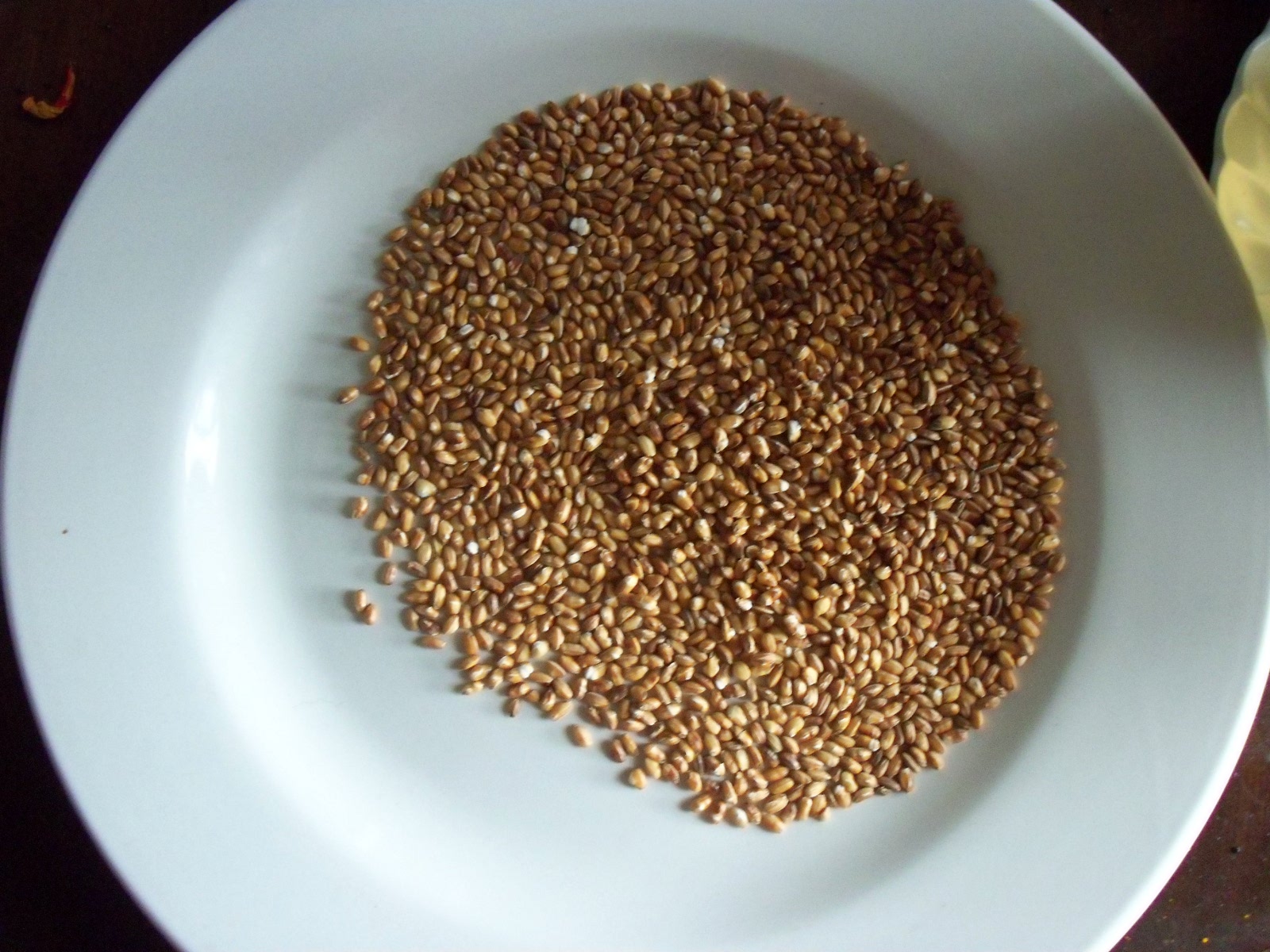
As I tend to this time of year, I let my bag of farmshare goodies guide the dish, using onion, carrot, bell pepper, hot pepper, kale and cherry tomatoes. I also took the opportunity to use up some languishing Italian sausage. While my flavoring scheme varies, there's a few things that are pretty consistent: about a cup of dry lentils to 5 or 6 cups of liquid, which is plenty to get a fairly thick consistency after cooking for a while. I've also become a fan of building up the body a little bit more by throwing in a couple tablespoons of rice that I've toasted in a dry skillet over medium heat. I usually grind this up for a slightly smoother texture, but you'll still get some thickening and toastiness with whole, toasted rice. I usually include some kind of mushroom, with varying levels of sneakiness, as mushrooms help support the savory richness of lentils, especially in meatless versions. Even without the addition of these last two items, you will still come up with a soup that is rich in texture and flavor, but they do add a little more oomph.

Of course one of the best things about soup, to which this is no exception, is that not only does this work well reheated for days after, it gets better the longer it sits around and lets the flavors get to know each other a little better.

    Lentil Soup in August

    gluten-free, dairy-free
    Serves 4 people for 1 meal or 1 person for 4 meals
  • 2 Italian sausages (about 6 oz. total), sliced or crumbled
  • 1 med. onion, medium dice
  • 1 large or 2 med. carrots, small dice
  • ½ large or 1 smaller bell pepper, red or green
  • 2 cloves garlic, minced
  • 1 hot pepper to your taste, minced or red pepper flake to taste
  • ¼ c. toasted rice, ground (optional)
  • 2 Tblsp. Magical Spice Blend
    OR
    • 1½ tsp. cumin
    • 1½ tsp. fennel seed
    • ½ tsp. ground black pepper
    • 1 tsp. thyme
  • 1 c. brown lentils, dry
  • 3 c. chicken or vegetable stock
  • 2 c. water
  • 1-2 dried shiitake mushrooms, ground or chopped fine
  • 1 tsp. salt (or to taste)
  • 8-10 leaves kale, stemmed and chopped/ripped into smaller pieces
  • 6-10 cherry tomatoes, halved
In dutch oven or other deep, lidded pot with at least 4 qt capacity, start cooking sausage over medium-high heat. When sausage starts browning and releasing some liquid (about 3 minutes), add onion. Stir occasionally for another 3 min. or so until onions start to soften. Add carrot, peppers, garlic, salt and spices. Stir occasionally for 3-5 minutes more, then add toasted rice (if using) and dry lentils. Stir to combine, then add stock and water. Cover and let simmer for at least an hour or transfer to slow cooker and set on low for all-day cooking. If using a slow cooker, also add kale at this point. For stovetop cookers, add kale about 45 minutes into simmering. Add cherry tomatoes just before serving. Goes well on its own or with a nice stout bread.

LinkWithin

Related Posts Plugin for WordPress, Blogger...