Showing posts with label quick. Show all posts

Tuesday, July 8, 2014

Peanut Noodles with Spring Greens. And an Egg.

For what it's worth, I wasn't complaining about the cold in February. Complaining about the dark, maybe. I save my temperature complaining for when it's hot out. It pairs well with my cantankerous stubbornness about air conditioning. Today peaked at 95°. Certainly not as hot as it can get around here, but just as certainly beyond comfortable.

Regardless of how warm it was today, here or where you were, we all have those days where the mere thought of turning on the stove makes you want to get another icy drink out. I've been realizing how much peanut sauce is a hot-weather staple for me recently: Fresh summer rolls dipped in it, drizzled over lettuce-wrapped rice (with or without anything else), or even just a bowl of veggies and a jar of peanut sauce.

This has been the recipe I've come back to more than others recently. Here, the peanut sauce dresses up cold buckwheat noodles tossed with long, thin cut cucumber or summer squash (inspired by zucchini noodles) and the piquant blend of greens I've been gradually thinning out of my garden. And ,just for good measure, an egg on top. Since discovering steam-cooked hard boiled eggs (a method which I can't recommend heartily enough), I've been putting them in all kinds of things. I'll let The Food Lab go into detail about the method, but by way of my recommendation, it is faster than other boil methods (since you only have to wait for ½" of water to come to a boil), and I have had an almost perfect peel record with it. The closest thing to an imperfect peel I've had since starting to use it is actually in the photos of this dish, and I'm pretty sure that one was my fault.

It's pretty good without the egg, too, though, and is totally vegan without it. If you're not eating eggs for whatever reason, the peanut sauce does provide a little protein, but I've also made and enjoyed this with crispy-fried bits of tempeh.

Peanut Noodles with Spring Greens

2 servings
  • 100 g soba noodles (one bunch)
  • 1 cucumber or small summer squash/zucchini
  • ¼ c. peanut sauce (see below)
  • 2-3 c. mixed baby greens (1-2 good handfuls per serving)
  • 2 eggs, boiled (or steamed!) to your preference (I like about 8 minutes here)
  • optional but nice:
    • scallion, sliced thin
    • a few sprigs of cilantro


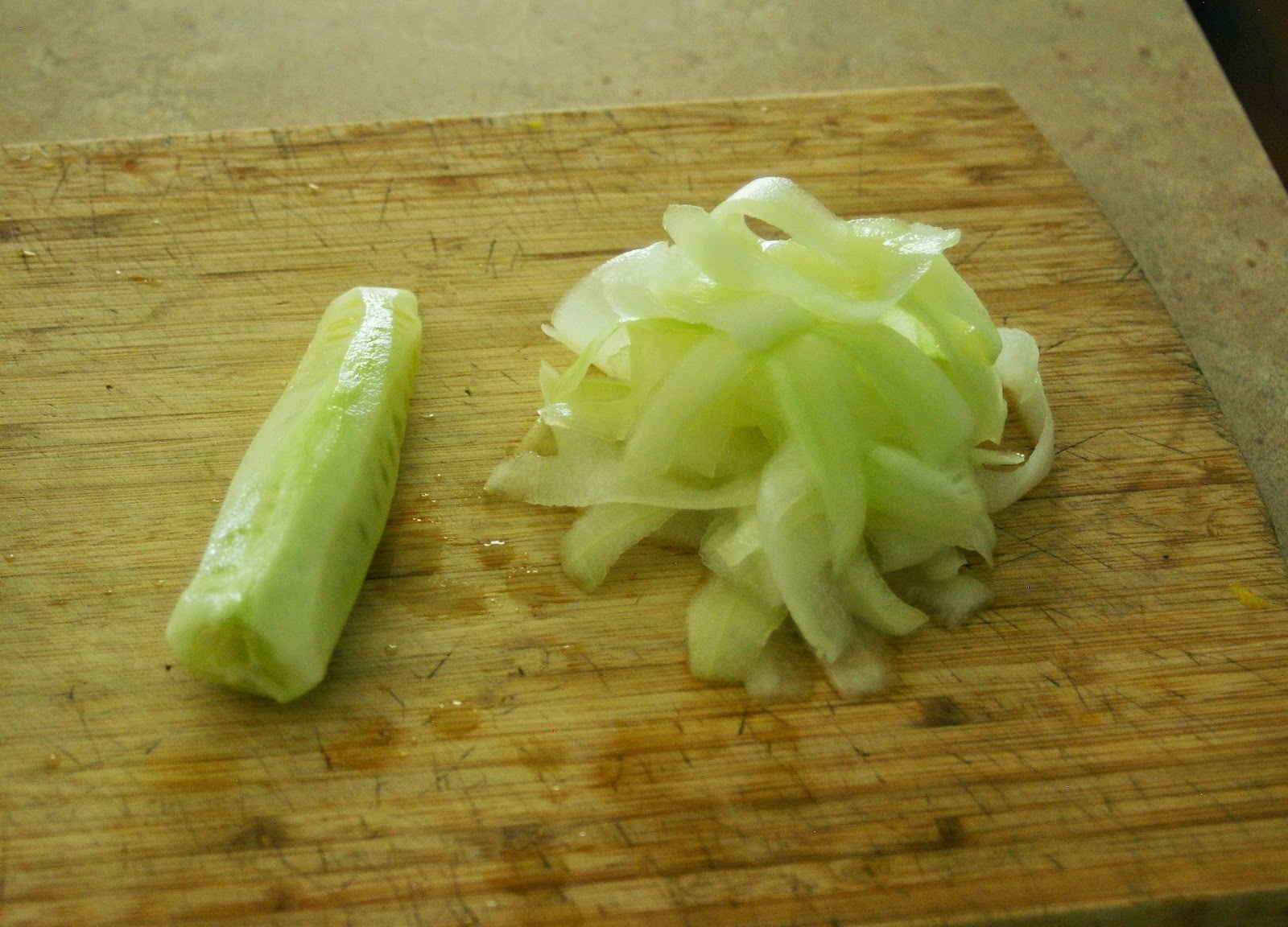
Start by putting on water to boil the noodles and cook the eggs (if you've got time, you can use the same pot and do the eggs after the noodles). While the water is heating up, peel your cucumber or squash. They're both very tasty here, and bulk out the noodles with cool fresh flavor. If you've got a spiral slicer or julienne peeler, good for you. You know what to do, so go to town. Otherwise, use your vegetable peeler to peel thin slices off of the cucumber or squash until you get down to the seeds. If you prefer, you can slice these strips thinner to blend in with the noodles more.

Once the noodles are cooked, make sure to run cool water through them until chilled. Toss the noodles and cucumber/squash in the sauce until well coated. Divide up into bowls and toss with a handful of greens, then top with an egg.


Peanut Sauce

vegan, gluten-free depending on your soy sauce
makes about 1 cup of sauce
  • ¼ c. peanut butter (Mine is creamy, natural & salted. Yours will work too, but you might have to add more or less stuff)
  • 1-2 Tblsp. sugar
  • 1 clove garlic, minced
  • 1 tsp. minced fresh ginger
  • ½-1 tsp. thick chili-garlic sauce like Sriracha or sambal oelek
  • (or more, to taste)
  • 2 Tblsp. soy sauce
  • ¼- c. water
Add all ingredients except water. Add water a tablespoon or so at a time, stirring until thoroughly combined before adding more water. If you add too much water at once, the suspension will break and you'll get weird thready peanut-butter bits in seasoned water. If this happens, add a little more peanut butter and stir until smooth. You'll have to add more water later. Adjust seasoning as necessary.

Thursday, May 9, 2013

Curried Tempeh with Mustard Greens and Cellophane Noodles

I'll be perfectly honest: I didn't like tempeh as a kid.

In fact, early experiences with tempeh meant that I didn't give it much of a chance again until about a year ago, but, boy howdy, am I making up for lost time.

Tempeh is a protein-rich food made from split soybeans and, sometimes, a variety of grains which have been parcooked and innoculated with Rhizopus oligosporus, a type of fungus, and incubated for 24-48 hours. The culture partially ferments the legumes/grains, making them easier to digest, and binds them together into a firm cake with a mild flavor somewhere between nuts and mushrooms. It can be sliced or crumbled and holds up to grilling or stir-frying. Most tempeh is gluten-free, but, if you're concerned about that kind of thing, it's important to read the labels on multigrain tempehs, which vary in contents, but sometimes include gluten-bearing barley or rye.

In its native Indonesia, it's very often served fried or grilled, often with some kind of lightly sweet & spicy accompaniment. Peanuts turn up with it a lot too. For me, I've found that I still don't fancy the taste of plain tempeh - despite liking nuts, mushrooms and tempeh - but that sauteéing it until it's a little crispy with some salt or soy sauce makes a world of difference.

Recently, I've been cooking it up in a spicy-sweet stir-fry with mustard greens, largely inspired by this South Indian take on tempeh from Delectible Victuals, with the addition of a generous helping of fresh cilantro, including the stems. It's good over rice, but it's great tossed with thin cellophane noodles, made from mung beans and also gluten free (available at Asian markets - rice vermicelli is a good, slightly more common replacement and any other thin, clear noodle would work). If you want to serve with rice or bread, you can simply omit the steps in the recipe below involving the noodles. It's also at least as good cold the next day.

Curried Tempeh with Mustard Greens and Cellophane Noodles

vegan, gluten-free (depending on tempeh, soy-sauce)
Ready in about 30 minutes, serves 2-3
  • 1 small-medium onion, small dice
  • 2-3 cloves garlic, minced
  • ½ red bell pepper, medium dice
  • 1-2 tsp. light-flavored oil
  • 1 tsp. ground turmeric
  • handful cilantro
  • soy sauce
  • 1 Tblsp. sugar
  • 1 8-oz. package tempeh, crumbled
  • thick chili sauce, like sambal oelek or sriracha, to taste (start with 1-2 tsp.)
  • 1 good sized bunch mustard greens or other medium-weight green like swiss chard, sliced into 1" ribbons
  • about 4 oz. dried cellophane noodles - in the packages I get, this is two bundles
  • crushed peanuts (optional)
Start by putting the noodles in a bowl of warm water to soak, which is all the precooking they need. They will need to soak at least 15 minutes. Prep the veggies and crumble tempeh coarsely. Cut off the bottom half of the cilantro stalks. Set aside the leafy end for later and mince the stem end very small.

Heat a large wok or skillet over a high heat. Add a teaspoon or two of oil and swirl to coat. Add tempeh and a teaspoon or two of soy sauce. Cook until tempeh becomes browned and a little crispy. Set aside and try not to pick at it too much. Wilt the greens slightly in a separate pan with a tight fitting lid by putting on medium-low heat with a tiny bit of water in the bottom. The greens will reduce in volume by at least half.

Add a little more oil to the wok or skillet and add the onions, garlic, bell pepper and minced cilantro stem. Saute until the peppers and onions get a little color, then add the turmeric and sugar. Add the tempeh and chili sauce. Drain the noodles, then add the wilted greens and noodles to the wok or skillet. Toss to combine. Remove from heat and toss with roughly chopped cilantro leaves. Adjust soy sauce, chili and sweet levels as desired. Serve with optional crushed peanuts on top.

Wednesday, November 7, 2012

Butternut, Coconut, Curry-nut?

Apparently, this has turned into the squash blog. Realizing this would be my third subsequent squash post, I almost posted about something else. However, the following things occurred to me:
  1. These are three quite different squash recipes, illustrating the versatility of the vegetable.
  2. Who would come here who doesn't want to hear more about squash‽
In my last post about squash-filled profiterole, I went on, possibly at too great a length, about why roasting a bunch of squash and keeping it in your fridge is a fabulous idea. I won't repeat myself, but it is; consider this recipe Exhibit B in the case. A rich, satisfying dish that balances sweet and savory, this contains a complete protein when you add rice and happens to be vegan, gluten-free and nut-free (the coconut, despite its name, does not affect those with tree-nut allergies).

As long as you already have roasted squash, this curry comes together in no time flat - about 20 minutes at the outside. Although I sometimes recommend forgetting to start the rice until well into cooking a dish to give you an incentive to let something simmer longer, this is a dish where you want to make sure to start the rice ahead of the other dish so you won't end up waiting on the rice.

I used a smallish (probably 2-3 lb) butternut squash for this dish, but other varieties of winter squash will also work. To roast squash, halve it, scoop out the seeds and place on a lightly oiled (foiled if you don't want to scrub) baking sheet. Bake at 375° for 35-60 minutes. Check at 30 minutes and poke the squash at its thickest part, then estimate how much longer until it's tender or check every 5-10 minutes.

Squash, Coconut & Chickpea Curry

vegan, gluten-free, nut-free
Takes about 20 minutes, serves 3-4
  • about 2 lb winter squash, roasted and cut into 1" cubes
  • 1 onion
  • 3 cloves garlic
  • 1 tsp brown mustard seed
  • ½ tsp. fenugreek seed
  • 1 tsp. cumin seed
  • ½ tsp. turmeric
  • ½ tsp. coriander
  • ½-1 tsp. red pepper flakes
  • ½-1 tsp. salt
  • 1 15 oz. can chick peas, drained
  • 1 can coconut milk
In large, heavy bottomed pot, heat a few teaspoons of veg. oil over high heat. Add mustard, fenugreek, cumin and coriander. Once the seeds start to sizzle and pop, add the garlic and onion. Once onion has started to soften and brown a bit, add chick peas, turmeric, red pepper and salt. Toss, then add squash and coconut milk. The squash will start to break down and blend into the coconut milk, making for thick, saucy goodness. The squash shouldn't totally dissolve and dissappear, though.

Simmer for a few minutes, adjust seasoning and serve over rice. Cilantro is also nice addition right at the end, too.

Monday, October 8, 2012

Quick Hits: Chile-Lime Winter Squash/Sweet Potato

It's that time of year where I fall in love with my favorite orange vegetables again - winter squash and sweet potato. Last year, my CSA farm's winter squash crop was drowned by Hurricane Irene. This picture to the right was taken in the squash field. From a kayak. The squash are under about 12 feet of Connecticut River.
They did find their princess in another castle, though, taking in their best sweet potato crop ever from a field a little farther away from the river. In many recipes, this one included, the two are interchangeable. They have very similar nutritional profiles, as well. They're both extremely high in Vitamin A (as are most orange vegetables) and very good sources of Vitamins C, B6, potassium and fiber.

This simple but striking presentation, dressed in sweet, tart and spicy, works equally well for either. Butternut squash is an excellent choice for a dish like this; it's fleshy and its thin skin means it doesn't need to be peeled, just well washed, before being cubed and roasted. Delicata's another good sweet, thin-skinned variety but have a lower flesh-to-seed ratio than butternut. You can eat the rind of any squash, but with many of the thicker-skinned squashes, like buttercup/kabocha, pumpkin or hubbard, you don't want to.

Chile-Lime Squash/Sweet Potato

vegan, gluten/grain-free
done in about 30 minutes, serves 4 as a side
  • 1 large butternut squash, cut to bite-sized wedges
  • or
  • 2 medium sweet potatoes, cut into bite-sized pieces
  • 2-3 Tblsp. olive oil
  • ½ tsp salt
  • 1 tsp cumin
  • 1 tsp cinnamon

  • Dressing:

  • 1-2 T honey
  • zest & juice of one lime
  • ¼-½ tsp. ground chipotle pepper
  • or
  • 1-2 canned chipotles, minced
  • or
  • 1 small red chile, minced
  • some fresh cilantro (optional), roughly chopped

Toss squash with olive oil, spread on sheet pan and sprinkle with salt, cumin, cinnamon. Bake at 450°F for about 25 minutes, turning once. Remove from oven and toss with dressing and cilantro

Saturday, September 29, 2012

Quick Hits: Herb Garlic Parmesan Potato Wedges

A sure sign of fall: potatoes are back! Boil 'em, mash 'em, stick 'em in a stew! Perhaps the biggest source of the potato's meteoric rise to culinary ubiquity in Europe has to do with how little need be added to reach being comfort food: little more than heat, salt and maybe butter. You can definitely add more (see last fall's breakdown of Potato Gnocchi with Leek, Kale & Sage Butter), but, as demonstrated by the recent excitement about Waffle-Iron Hashbrowns, the spud requires little help past heat.

Here, cheese and garlic help play up the warm, toasty potato goodness, adding a flavorful crustiness to a simple roasted spud.

Herb Garlic Parmesan Potato Wedges

vegetarian, gluten/grain-free
serves 4-5, about 30 minutes, start to finish
  • 3 lbs potatoes (red ones are nice, but not essential)
  • 2 T olive oil
  • 1 tsp salt
  • Topping:

  • 4-5 cloves garlic, minced
  • 6-10 sprigs thyme (or about 3-4 T)
  • fresh ground black pepper
  • ¼ c. grated parmesan cheese
Preheat oven to 450°F.

Cut potatoes into wedges (6-8 per spud) and toss with olive oil. Spread on sheet pan and sprinkle with salt and pepper. Bake wedges for 10-15 min.

While wedges are roasting, mince garlic and mix with other topping ingredients. Turn potato wedges, sprinkle with topping, and return to oven for about 5 minutes.

Monday, September 3, 2012

The Co-op's Korean Spinach

I'm pretty sure that the reason I would happily down this entire bowl of spinach has more to do with it being tasty than about it tasting like good memories, but it can be hard to tell the difference sometimes.

This is a great spinach dish for people who think they don't like spinach: it has a mild, savory flavor that enchants all kinds of palates. It's also, starting with frozen spinach and adding very little, highly nutritious and cheap as chaff.

Wednesday, August 15, 2012

Quick Hits: Lentil, Herb & Feta Stuffed Tomatoes

The months of drooling, rhapsodic fantasies about perfectly-ripened field tomatoes have finally given way to a flood of them. It's not an overabundance; that would imply too much. The simple joy of slicing a tomato, sprinkling it with salt and maybe drizzling a little olive oil over it hasn't gotten old yet, but there's so much more to do with tomatoes before you even get to cooking them. I tossed together this fresh-stuffed tomato using some left over odds and ends recently and was so excited about it that I had to recreate it and write it down to share.

The dish is built around a protein-rich lentil and grain stuffing, simply flavored with a healthy handful of fresh herbs, a little feta, and the guts of the scooped-out tomato. It may look like a salad, but it eats like a meal.

Saturday, August 4, 2012

Quick Hits: Pickled Radishes


When I teach square roots and other math involving radicals, I take great pleasure in putting little radishes on all of my handouts. It's a place where my odd sense of humor can bring together my nerdy loves of language, math and food. The point of connection is this: both radish and radical derive from the same Latin word, radix, meaning "root."

For all of my love of the linguistic spin-out of radishes, though, I'm a little lukewarm on eating them, at least the red European varieties. It's a little puzzling to me, because all of the words I put together to describe the flavor of such radishes are usually words common to foods I really like: spicy, peppery, mustardy, crisp. I like daikon radish fairly well, but it's almost more of a texture than a taste. What would the Fraggles think?

Earlier in the summer, I ended up with several bunches of radishes from my farm share and while dragging my feet and feeling bad about not using them, decided to look up pickled radish recipes. After reading a number of recipes, I put together a radish refrigerator pickle and hoped for the best. After letting them sit for a few days, I pulled them out. The bright color of the radish skin had leached out into the brine, giving it the vivid red tone of generic fruit punch. I tasted them and was initially disappointed: the radishy taste was still there, thinly veiled with salty vinegar. I put them back in the fridge, hoping, as with the fresh radishes, that they would magically transform into something I liked.

About a week later I was making some tuna salad and, on a whim, pulled out the radish pickles again, chopped some up, and added them to the salad, where they ended up being the star. Suddenly, I was looking for things to include them in. That was really the key: they go in things, not on their own. Since then, they have improved burritos, falafel, and a variety of cold salads. I'm almost out, and I may even go out and buy more radishes to make more pickles.

    Refrigerator Radish Pickles

    raw, vegan, gluten/grain-free
  • 1½-2 c. sliced red radishes (8-12 radishes, depending on size)
  • 5 cloves garlic, sliced or smashed
  • 1 c. cider vinegar
  • ½ tsp whole black peppercorns
  • ½ tsp. kosher salt
  • ½ tsp. sugar
Put the vinegar, salt and sugar in a pint jar, put the lid on and shake vigorously until salt and sugar are dissolved. Add sliced radishes, garlic and peppercorns. Replace the lid and put the jar in the fridge. Allow pickles to sit for at least 5 days before using.

Serve in a sandwich, falafel, or burrito or add to tuna salad.

Wednesday, July 25, 2012

Swordfish with Peach-Corn Salsa


My CSA keeps me sane in the summer: it helps keep my miserly urges from denying me fresh vegetables and jump starts my culinary creativity in a couple different ways. Not only does the seasonality lead me into the diverse options for familiar vegetables, but it also forces me to try out vegetables I'm less familiar with (see the last post, a study of kohlrabi). This has worked really well for the last few yeas, and both my miserly urges and desire for a varied palate are satisfied.

This year, the farm down the road where I have a share became a pickup location for Cape Cod Fish Share. The fish share does the same things that the vegetable share does for me as regards creativity and circumventing the miserly urges, but also answers many of the sourcing and sustainability questions that keep me from buying fish regularly.

Wednesday, July 18, 2012

The Kohlrabi: Spherical, but quite pointy in parts!

What is Sputnik doing in my CSA share?!

One of the best parts of a farm share is the surprises: the chances to meet a new ingredient head on, figure out what makes it tick like a tasty bomb, and eat it up. Kohlrabi is one that I'm still figuring out, and the friends with whom I do farm pickup have been left scratching their heads as well. It's only in the share a once or twice out of the year, and each year has slowly revealed its charms a little more. This year, I think I finally have its number.

CSA-share head-scratch staple kohlrabi, which looks like a more organic version of Sputnik (spherical, but quite pointy in parts!), is part of the largely familiar Brassica oleracea crew, which includes kale, broccoli, cauliflower, Brussels sprouts and cabbage (but not napa cabbage or bok choy, which are Brassica rapa). It's remarkable to think that they're all the same species, but, then again, so are chihuahuas and Irish wolfhounds.

Sunday, May 20, 2012

Forget Spring Rolls: Summer Rolls

I've been suffering urges to eat live green things by the fistful recently. There's something about the onset of hot weather and the boisterous upspringing of plants that makes me want to rip off their tender little leaves and eat them like a hungry, hungry beast. It's like I'm trying to cram in all of the fresh air and sunlight they've absorbed. I am eating plants the way some ancient warriors consumed the heart of their enemy: to gain their strength and wisdom. There's a Philip K. Dick short story, "Piper in the Woods", in which people, suddenly craving a simpler life, start claiming that they have become plants. There's a certain appeal to it: what if sitting still, smiling at the sun all day fulfilled all of your needs? In the absence of that, or, rather, the presence of all the other things that must be done, or that I do anyway, I try to steal the essence of leafy plants. By serenely dismembering and eating them.

Vietnamese gỏi cuốn, literally, "salad rolls" but also known as summer rolls or Vietnamese spring rolls, combine fragrant, leafy herbs, crisp veggies like bean sprouts and thin-cut carrot and cucumber, and a little bit of protein, usually from shrimp or shredded chicken and roll it all up in bánh tráng, rice paper. Not only do they satisfy my unholy cravings for crisp, green crunch, but they also require very little prep and even less time with the stove going, which is always at a premium when it gets hot out. Even more so, they're fun to put together and make dinner into a great group activity.

Monday, October 10, 2011

Freedom Eggs: Protein, History and Good Karma, together at Last (Kunming Tomato and Egg)

We recently started getting eggs from a family at the school where I teach. Local eggs are something I'd been meaning to catch up with for a while, but despite my good intentions driving by "Fresh Eggs" signs alongside the road, it hadn't happened yet. So when I saw a flyer in the school lobby advertising weekly delivery to the school, I was sold. Someone's going to bring me a dozen eggs every other week at school? Awesome.

The family farm in question is an interesting place. It's on the site of the Ross Farm in Florence, MA, the last remaining building of a center of 19th century abolitionist and civil rights activism and stop on the Underground Railroad. At various points in that epoch of its history, it played host to such historical figures as Sojourner Truth (one of Florence's most celebrated historical residents) and Frederick Douglass, who was a frequent lecturer there.

These days, the farm is the family homestead of the Walker/Hammarlund clan, and also plays host to an herb farm run by another couple. I first caught wind of their project shortly after a play about local abolitionists by the class of one of their kids used a field trip to their house as a narrative framework. Someone mentioned that they were gearing up to start doing egg delivery by donkey cart. As if this operation needed to be any more stylish (donkey cart delivery is only available within Florence).

Shortly before the beginning of the school year, the farm was impacted by flooding of the Mill River caused by Hurricane Irene, which came up fairly suddenly and found them literally tossing chickens out of the barn to keep them away from the rising floodwaters.

In any event, we've been enjoying the eggs. I cracked open a double-yolker earlier today. However, going through a dozen eggs in two weeks is a quicker pace than we're accustomed to. It will pick up when I get into serious soup for lunch season and start including eggs in my lunch more often than not. In the meantime, this very simple dish has saved the day from the cranky hungries (or "the hangries" as we call it) a few times over the last few weeks. While any number of cultures have their own simple dishes focused on egg and tomato, this is one Maria learned from her Chinese professor in college, who was from Kunming in the southwestern Yunnan province (fun fact! in Mandarin, the word for tomato directly translates as "barbarian eggplant"). It's little more effort than plain scrambled eggs, but so much more satisfying.

Kunming-style Tomato and Egg

vegetarian, gluten-free
serves 1, 10 minutes start to finish
  • 2 eggs
  • 1 small or ½ large tomato, large dice (or a small handful of cherry tomatoes, halved or quartered)
  • 1-2 scallions, sliced into rounds
  • OR
  • 1 clove garlic, minced
  • 1 tsp. soy sauce
  • ½ tsp. sugar
  • ¼-½ tsp. salt
  • a drizzle or spritz of oil to grease the pan
Crack eggs in a bowl and whisk with a few pinches of salt and about half the sugar. Prep the tomatoes and scallions/garlic. Heat pan on med-high heat. Add oil and the garlic or half the scallion. Give it about 30 seconds to start smelling toasty, then add the egg. Start cooking it in an undisturbed sheet, as for an omelet. Pull up the sides every so often and tip/swirl the liquid egg out to the edges to cook. Once it's mostly set, break it up and add the tomato, soy sauce and remaining scallion and sugar. Serve hot on its own, over a little rice or with a piece of toast.

Friday, September 16, 2011

Quick Hits: Panzanella

We have kind of a unique problem - we have too much artisan bread hanging around on a regular basis. Maybe it sounds a little less whiny if I tell it like it really is: we have too much half-stale artisan bread hanging around. Maria works most of the week as a farmstand muffin and cookie-slinger, but one night a week, she puts on her cape and cowl and takes on her real passion: bread. Every Monday, after working a full shift at the regular baking job, she heads out at 11 o'clock at night to go shape bread at El Jardín, one of a few local bakeries that focus on wood-fired, sourdough bread. She returns, half-delirious, at about 9 o'clock in the morning, often towing several loaves of day-old sourdough, and proceeds to sleep for most of her Tuesday off (and then wakes up in the afternoon and commences cooking again for her weekly pot luck).

Bread, especially sourdough, is kind of a family legacy. We grew up with perpetual sourdough. Mom began baking when pregnant with me, and, for several years, plied her bread at the Brattleboro Farmer's Market out of the back of the 1970s Volvo with her spokesbabies. When I was about 5, she got a job baking in the kitchen at The Putney School, where she was encouraged to further develop her sourdough wiles. We also grew up in the back of that kitchen, warming ourselves against the huge, ceramic-lined ovens and sampling whatever came down the pipeline. As such, we grew up with the idea the sourdough wasn't a big deal. Folks' ability to normalize their childhood is remarkable sometimes. All that said, we only eat so much bread before it becomes almost unslice-ably stale. I guess it's better than it going moldy, with which you can do very little, but we store it at room temperature and not in plastic, which will get you stale over moldy most days. For better or worse, once bread has gone totally stale and lost all its moisture, it really won't go moldy.

So, we end up swimming in stale sourdough, and having to find creative ways to use it up outside of making breadcrumbs in quantities of epic proportion. Leading up to the end of summer, here's a quick favorite: Panzanella, a quick, Italian bread-tomato-basil salad full of simple, fresh, summery flavors that we always have trouble not picking to death before it makes it to its destination (the same can be said of another favorite stale bread usage, a savory bread pudding, but that's a story for another, cooler day).


    Panzanella

    vegan, about 20 min. start to finish
    serves 4-6
  • 1 loaf half-stale bread, large dice
  • 2 med-large tomatoes, large dice
  • 3-4 cloves garlic, slivered
  • ¼-½ c. olive oil
  • 1-2 tsp. salt (this is a good opportunity to break out the good salt)
  • 3-4 stems (15-20 leaves) fresh basil, chiffonaded
  • fresh ground black pepper to taste

  • Optional:
  • 1 chile, seeded and minced
After prep, toss all ingredients save the garlic. Toss garlic in a skillet with some of the olive oil over med-high heat until it starts to smell toasty, then sprinkle on top. Let sit for as long as you can stand it, or at least 15 minutes. Crank black pepper to taste over the top.

Thursday, September 8, 2011

Art in and of the Orchard: Baked Apple Pancake with Bourbon Caramel Sauce


Art is never far from hand here in the Valley. Park Hill Orchard, here in Easthampton, is currently hosting a sculpture exhibit, which I finally got around to checking out this weekend. It features a variety of sculpted pieces from mostly local artists, ranging from abstract collections of wood and metal to found-object metal insects to a tree studded with plaster lips. Also, they were handing out a tart Paula Red apple to everyone who showed up to walk the exhibit path. As one of the owners explained, “We're not so much farmers who go into art as artists who got into farming.” The exhibit's been up for almost a month now, but it's almost a more rewarding trip the farther into fall we go, as there's more apple opportunities to take advantage of at this point. The advertising of the free apple worked well enough for me to take a ¼-peck home, and they had cold, fresh cider for sale at the stand as well.

Sawflower
Chris Woodman
Emergence
Robert Markey
View of Mt. Tom from the orchard

As much as I try to avoid snobbish attitudes around food, I haven't been able to completely avoid being a bit of a cider snob. I grew up with Vermont's largest contiguous apple orchard in my backyard, and spent falls in high school making fresh cider, many gallons at a time, to be served in the school dining hall. I'd take home a half-gallon from the cider house and drink it almost to the point of causing intestinal unrest. When you've drunk enough cider that way, bright, fresh and right off the press, it's almost impossible to tolerate the pasteurized apple juice that passes for cider in most supermarkets (which can make decent mulled cider, so I guess it's not a total waste of space). It even seems like a waste to heat it up with mulling spices or save it to make hard cider because that would mean not drinking it fresh. I can get good hard cider all year round and lesser ciders will do for mulling, but there's only a few months' window for good, fresh cider. It's my annual torrid fall love affair.

I'm not quite so passionate in my opinions where it comes to apples (except in my repudiation of so-called Red Delicious "apples," which is probably stronger than my opinion on cider, but doesn't come up as often). If I'm having a torrid seasonal love affair with cider, apples and I are like friends from summer camp: you hang out a lot more for a short part of the year, but you keep up on and off the rest of the year, too. You probably know them better than you know tall, dark and thirst-quenching. My favorite apples are still pretty bold and tart, varieties many consider to be pie apples: Northern Spy, Cortland and Empire are some favorites. The Paula Reds that I brought home are an evolved version of the McIntosh that have a bright sweetness when very fresh that mellows the more time they're off the tree. I mostly eat them fresh this time of year, sticking a few a day in my lunchbag.

However, we turned up with several people for brunch this Sunday, and turned some of the apples into an apple pancake baked in a cast iron skillet and dusted with cinnamon sugar. It tastes a little like a warm cider donut. This is a recipe we came up with a while ago, and is notable partially because it represents Maria and I equally contributing to a recipe without feeling the need to squash each other for territorial reasons. It has a delicate, spongy texture, different from the other baked pancakes and Pfannkuchen to which it's related, due to volume of whipped egg whites, which take on the whole leavening job. We also happened to have some bourbon caramel sauce lying around, like you do, which we drizzled over the top of each slice to dramatic effect. If you don't regularly happen to have bourbon caramel sauce lying around, but would like to, the recipe for that follows as well. Additionally, one of our brunch guests took some gorgeous photos of the finished dish while we were busy, putting our usual photo stylings to shame.


    Baked Apple Pancake

    vegetarian, optionally dairy-free
    serves 4-6, start to finish in 30 minutes or less
    Dry Mix:
  • ½ c. flour
  • 3 Tblsp. sugar (+ 1 Tblsp. for dusting)
  • ¼ tsp. salt
  • ¼ tsp. nutmeg
  • ½ tsp. cinnamon (+½ tsp. for dusting)
  • ¾ med. apple (about 1/2 lb apple – I used a Paula Red), cut into ½” chunks (the last ¼ will be used for decorative slices on top)
  • Wet Mix:
  • 2 Tblsp apple cider (you can omit the yogurt/milk and use ¼ c. cider to make this dairy-free)
  • 2 Tblsp plain or vanilla yogurt OR 2 Tblsp. milk plus about ¼ tsp. vinegar
  • 1 whole egg*
  • Whip to stiff peaks:
  • 3 egg whites*
  • 1 Tblsp. butter or margarine
  • *We often have spare egg whites hanging around. You can get away with 3 whole eggs, separated. Mix the yolks in with the wet mix and whip the whites separately. You could even try it with just 2 eggs divided this way.
Preheat oven to 400°F.

Put together dry mix ingredients in a 2 qt. bowl. Make sure apple pieces get well coated with dry mix, as it well help them from clumping in the final product. The wet mix ingredients (which do not include whipped egg whites) should fit in something 1-2 c. in size. Mixing them in a measuring cup with spout makes the whole deal very easy to add. Whip the egg whites to stiff peaks. Add wet mix to dry mix and stir to combine, then fold in the egg whites.

Melt 1 T butter in a 9” cast iron skillet, then pour in the batter and spread out evenly. Arrange apple slices on top, then put it in the oven for 15-20 minutes, until it gets toasty-brown on top and a toothpick comes out of the center clean.

Combine reserved tablespoon of sugar and ½ tsp. of cinnamon, then use to dust the top. Let sit for 5-10 minutes (or as long as you can stand it). It should slide out of the pan with minimal coaxing. Slice as you see fit and serve, with or without caramel sauce.

    Bourbon Caramel Sauce

    Recipe adapted from David Lebovitz's Ready for Dessert
    Lebovitz's blog, Living the Sweet Life in Paris is always a good read as well.
  • ½ c. (1 stick) butter (salted or not, up to you), cut into pieces
  • 1 c. sugar
  • 1-2 Tblsp. water
  • 1 c. heavy cream
  • ¼ c. bourbon (a little more than a shot)
  • ¼ tsp. salt, or to taste
In a large heavy-bottomed saucepan (deep is important because it will bubble up pretty aggressively after the cream is added), melt the butter over medium heat. Add the sugar and water to cover. Stir occasionally until the sugar begins to caramelize. When it reaches a dark amber color and smells on the verge of burning, remove from heat and immediately add the cream. Stir until smooth, then stir in salt and bourbon. Sauce can be stored for up to 2 weeks if refrigerated, but let it come to room temperature before using.


Thursday, August 25, 2011

Pasta Ricotta: What Summer Tastes Like

Since the last post didn't contain any actual recipe, here's a quick one to keep you going. I read about this dish years ago at a friend's house in a cookbook that I couldn't pick out of a lineup of Italian cookbooks if my life depended on it at this point. The book's long-winded description of it essentially boiled down to: this is an ideal food to make during a long night of drinking. Its appeal is actually wider than that, though. Its precious few ingredients and simple composition mean that not only can you make it when you're half in the bag, but that each of those few ingredients shine.

Much of New England had a cool, rainy spell at the end of May/beginning of June this year, which means that tomatoes have been a little slow coming in. While we've been picking cherry tomatoes for almost a month now, the big slicers from the farmshare just started coming in last week. Et puis, la déluge: We brought home nearly a dozen big slicing tomatoes this week. The basil's been going strong for a while now, both at the farm and in our specialized home herb planter (right). Finally, they get to come together. The dish is as simple as this: pasta, tomato, basil, garlic, ricotta. It's hard to get closer to the taste of summer without just eating a slice of tomato with a basil leaf on top.

    Pasta Ricotta

    vegetarian
    Serves 2-3

  • ½ lb. pasta, shape of your choice, cooked
  • 1 med-large tomato, large dice (1½-2 c.)
  • 1-1½ c. basil, washed and torn
  • 2-3 cloves garlic, minced
  • drizzle of olive oil
  • 1-1½ c. ricotta
  • salt & pepper to taste

  • A few variations that don't meaningfully increase the amount of effort:
  • Replace all or part of the ricotta with chèvre.
  • Add red pepper flake or sliced fresh hot pepper.
  • Mash a few anchovies in with the garlic.
  • Include toasted, rough chopped pine nuts or walnuts, à la pesto.
  • Toss in a little chopped fresh spinach.
Cook pasta. All other prep can be accomplished while pasta is cooking. Prep tomato, basil and garlic as indicated. Mix those three in a bowl and drizzle with olive oil. When pasta is cooked and drained, empty in to large bowl and add vegetables and ricotta. Toss until combined and add salt and pepper to taste.

Saturday, August 13, 2011

Shiitake Part 2: Hot Cucumber Salad

As the last post discussed, we returned from Tuesday farmer's market with a pint of fresh, local shiitake mushrooms and were determined to make them shine in simple dishes.

Two days later, a friend of ours showed up for dinner with a flat of fresh veg. from the farm where he's been living. He turns up occasionally with interesting selections of ingredients in search of a good home. Friends like this are good friends to have. This haul included a few pints of different tomato varieties, several colors of summer squash, a half-dozen cucumbers, some mismatched eggplants and a tiny, heart-sized watermelon. While compulsively munching little, orange, crack-laced tomatoes, we described a dish another recent dinner guest had shared with us that we found astonishing: hot cucumber salad. Something she had picked up in her travels in Western China, primarily Gansu province, the dish is hot in both senses of the word: served hot from the wok and liberally dosed with chili and garlic.

Up until then, it hadn't occurred to me to do a cooked dish composed primarily of cucumber; it seemed anathema to the vision of cucumber as cool, crisp crunch. Most of the hot cucumber I'd eaten involved throwing some into a fried rice in its very last moments on the stove, or including it al minuto in a brothy soup. This dish totally sold me on the idea, though. Remembering a languishing, slightly wilted half-head of greenleaf lettuce, we decided to add that, making it somewhat of a hot reimagining of a green salad. Also, it seemed a perfect foil to our plan for the second half of the fresh shiitakes, cooking them with Korean rice cake.

Korean rice cake (dduk) is a little like a giant, glutinous rice noodle (which, despite the name, is gluten-free), which we buy sliced on the bias into rounds. It has a thick, chewy texture and pairs well with all kinds of things. In fact, between that and gochujang, a thick, chili-based condiment that has been near indispensable in Korean cuisine since the introduction of chili in the 18th century, you have a kick-ass base for a stir fry which you can plug almost anything into. But that's a story for another day: gochujang would have overwhelmed the delicate little mushrooms.

Instead, we cooked the rice cake with a little bit of onion, oil and salt over high heat to get a little bit of toasty char flavor (contrary to what some may say, burnt is a flavor; you just probably don't want it to be the dominant flavor of your dish), took it out, cooked the mushroom similarly, and then tossed them together. And we saw that it was good. It's so simple, it's almost redundant to write a formal recipe to follow that.

    Hot Cucumber Salad

    vegan, gluten-free
    Serves 2-3
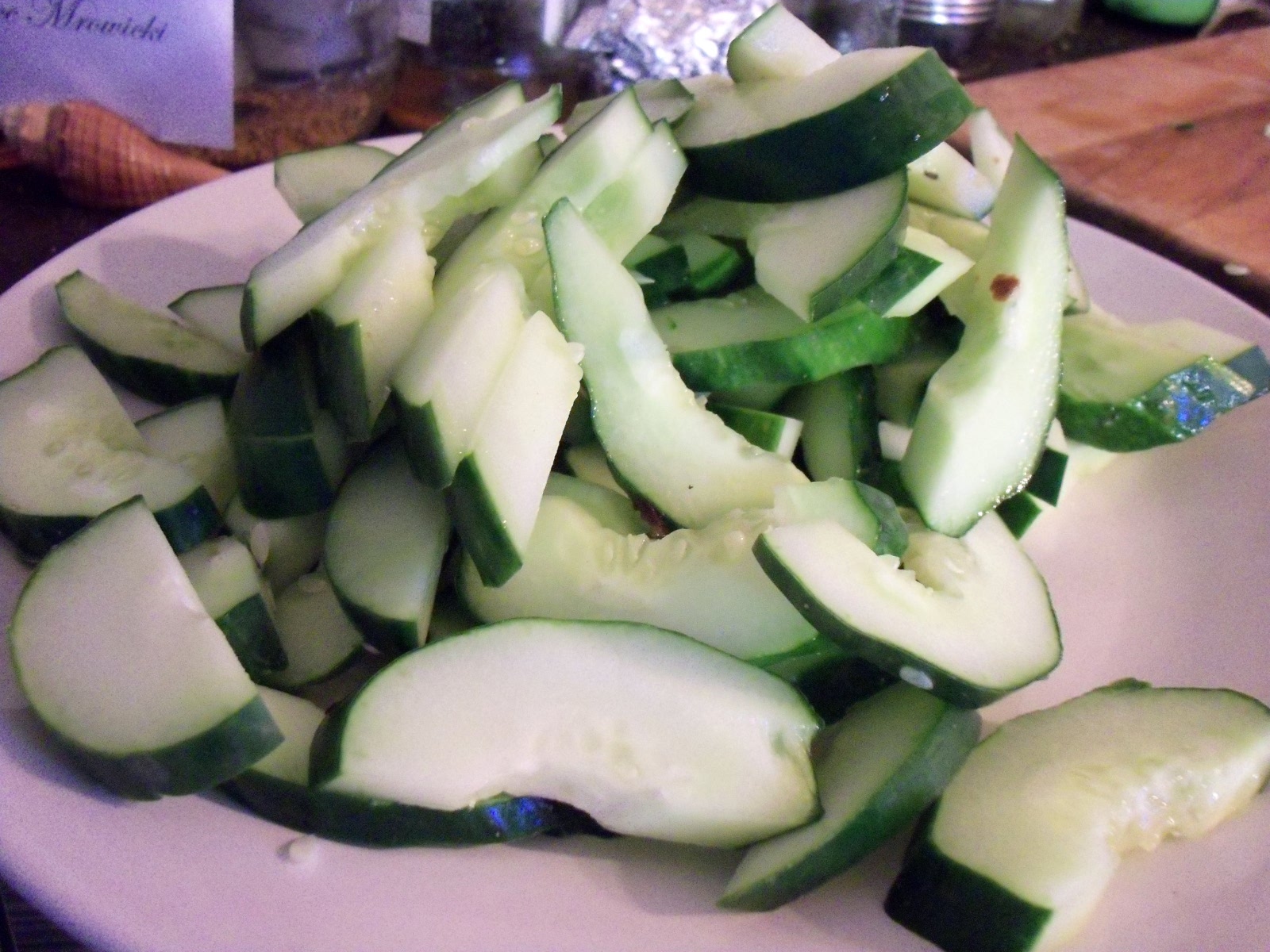
  • 2 med-large cucumbers, halved, seeded and bias-sliced med. thick
  • 3 cloves garlic, minced
  • 3 whole, dried red chilis, broken loosely
  • OR
  • 1 tsp. red pepper flake
  • 2 tsp. peanut or neutral oil
  • ½-1 tsp. salt

  • Optional:
  • 1 small head leafy lettuce, sliced into 1" strips
  • 1 Tblsp. rice vinegar
Prep vegetables. Heat wok over high heat. Swirl in oil. Add red pepper and about half the garlic. Tossing until the garlic smells toasty, about 10 seconds. Add cucumbers and toss. Sprinkle with about half the salt. and toss occasionally until cumbers start to get slightly soft, about 2-3 minutes. Add lettuce and vinegar, sprinkle with remaining salt and garlic. Toss to combine and cook until lettuce is somewhat wilted, 1-2 minutes.

    Shiitake & Rice Cake Stir Fry

    Vegan, gluten-free
    Serves 2, unless you've been sitting around eating too many little tomatoes, in which case it may serve 3
  • ~1 lb sliced rice cake (½ the bag)
  • ½ med. sweet white onion, med. dice
  • 4 tsp. peanut or neutral oil
  • 1 tsp salt
  • 1 c. fresh shiitake, sliced
  • ½ c. baby bella/crimini mushrooms, sliced
Heat wok over high heat. Swirl in 2 tsp. of the oil and add half the onion. Toss and add the rice cake. Sprinkle with half the salt. Toss/stir occasonally, letting the rice cake get a few charry speckles and the onion get a little soft, about 5 minutes. Remove to serving bowl.

Swirl in the other 2 tsp, of oil, add mushrooms and remaining onion. Sprinkle with remaining salt. Stir/toss until mushrooms & onions start getting soft, 3-5 minutes. Turn off heat, add rice cake back to wok and toss until combined.

LinkWithin

Related Posts Plugin for WordPress, Blogger...