Showing posts with label cilantro. Show all posts

Tuesday, July 8, 2014

Peanut Noodles with Spring Greens. And an Egg.

For what it's worth, I wasn't complaining about the cold in February. Complaining about the dark, maybe. I save my temperature complaining for when it's hot out. It pairs well with my cantankerous stubbornness about air conditioning. Today peaked at 95°. Certainly not as hot as it can get around here, but just as certainly beyond comfortable.

Regardless of how warm it was today, here or where you were, we all have those days where the mere thought of turning on the stove makes you want to get another icy drink out. I've been realizing how much peanut sauce is a hot-weather staple for me recently: Fresh summer rolls dipped in it, drizzled over lettuce-wrapped rice (with or without anything else), or even just a bowl of veggies and a jar of peanut sauce.

This has been the recipe I've come back to more than others recently. Here, the peanut sauce dresses up cold buckwheat noodles tossed with long, thin cut cucumber or summer squash (inspired by zucchini noodles) and the piquant blend of greens I've been gradually thinning out of my garden. And ,just for good measure, an egg on top. Since discovering steam-cooked hard boiled eggs (a method which I can't recommend heartily enough), I've been putting them in all kinds of things. I'll let The Food Lab go into detail about the method, but by way of my recommendation, it is faster than other boil methods (since you only have to wait for ½" of water to come to a boil), and I have had an almost perfect peel record with it. The closest thing to an imperfect peel I've had since starting to use it is actually in the photos of this dish, and I'm pretty sure that one was my fault.

It's pretty good without the egg, too, though, and is totally vegan without it. If you're not eating eggs for whatever reason, the peanut sauce does provide a little protein, but I've also made and enjoyed this with crispy-fried bits of tempeh.

Peanut Noodles with Spring Greens

2 servings
  • 100 g soba noodles (one bunch)
  • 1 cucumber or small summer squash/zucchini
  • ¼ c. peanut sauce (see below)
  • 2-3 c. mixed baby greens (1-2 good handfuls per serving)
  • 2 eggs, boiled (or steamed!) to your preference (I like about 8 minutes here)
  • optional but nice:
    • scallion, sliced thin
    • a few sprigs of cilantro


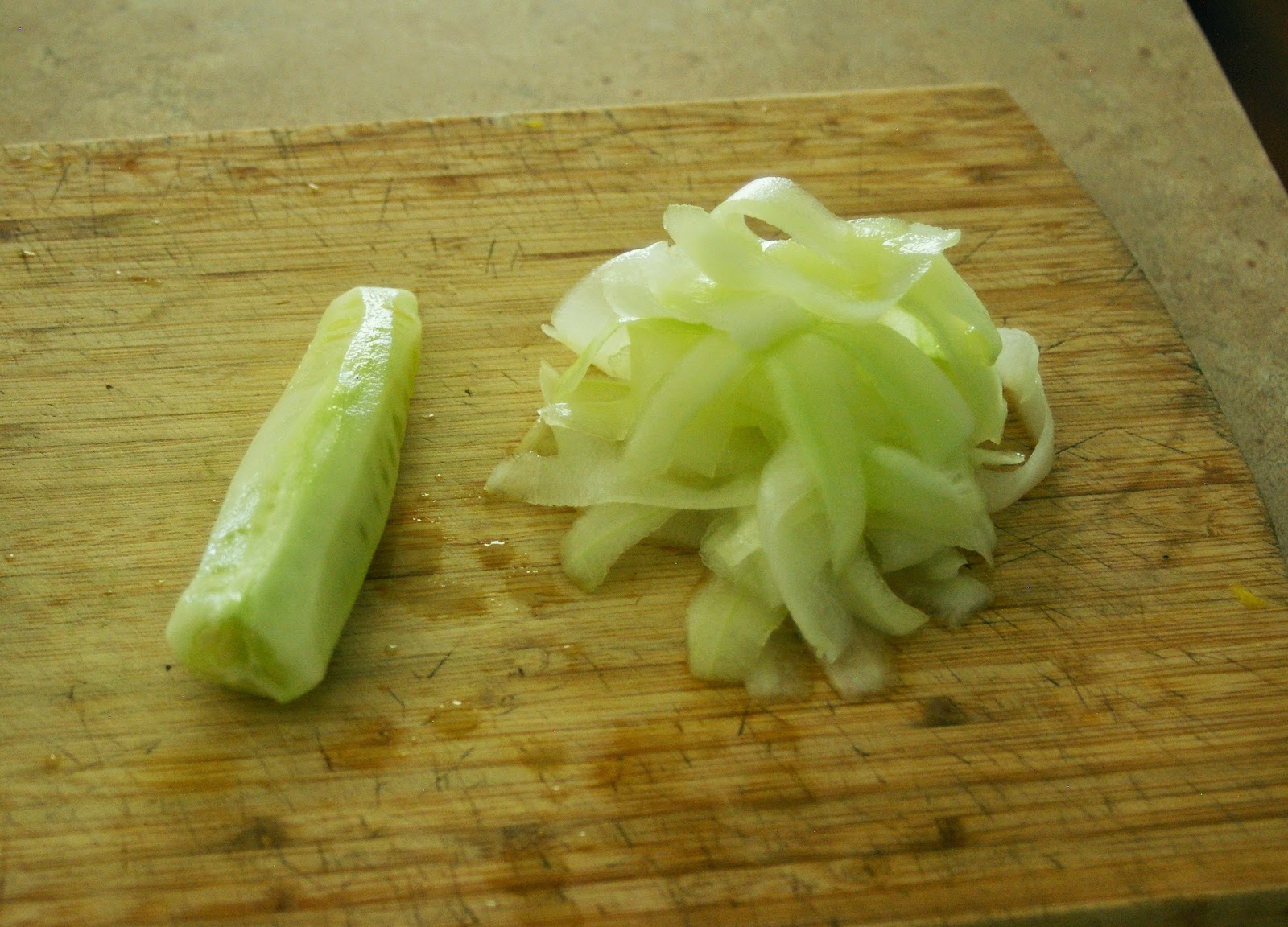
Start by putting on water to boil the noodles and cook the eggs (if you've got time, you can use the same pot and do the eggs after the noodles). While the water is heating up, peel your cucumber or squash. They're both very tasty here, and bulk out the noodles with cool fresh flavor. If you've got a spiral slicer or julienne peeler, good for you. You know what to do, so go to town. Otherwise, use your vegetable peeler to peel thin slices off of the cucumber or squash until you get down to the seeds. If you prefer, you can slice these strips thinner to blend in with the noodles more.

Once the noodles are cooked, make sure to run cool water through them until chilled. Toss the noodles and cucumber/squash in the sauce until well coated. Divide up into bowls and toss with a handful of greens, then top with an egg.


Peanut Sauce

vegan, gluten-free depending on your soy sauce
makes about 1 cup of sauce
  • ¼ c. peanut butter (Mine is creamy, natural & salted. Yours will work too, but you might have to add more or less stuff)
  • 1-2 Tblsp. sugar
  • 1 clove garlic, minced
  • 1 tsp. minced fresh ginger
  • ½-1 tsp. thick chili-garlic sauce like Sriracha or sambal oelek
  • (or more, to taste)
  • 2 Tblsp. soy sauce
  • ¼- c. water
Add all ingredients except water. Add water a tablespoon or so at a time, stirring until thoroughly combined before adding more water. If you add too much water at once, the suspension will break and you'll get weird thready peanut-butter bits in seasoned water. If this happens, add a little more peanut butter and stir until smooth. You'll have to add more water later. Adjust seasoning as necessary.

Sunday, April 13, 2014

Tortilla Soup: Great Sick Food or Greatest Sick Food?

In 2000, Dr. Stephen Rennard of the University of Nebraska set out to design a study to examine if and how chicken soup might actually help people suffering from the common cold. In the study he started with his wife's recipe, handed down from her Lithuanian grandmother. Results from Rennard's study suggested that chicken soup may actually help fight colds by inhibiting the movement of a particular type of white blood cell that defends against infection. Rennard's team (and other scientists who have replicated the study since then) found similar results with other chicken soup recipes as well, though they couldn't identify which ingredients were key to the soup's immuno-supportive qualities. You can see Dr. Rennard's article, Grandma's recipe and some adorable pictures of him and his wife cooking soup together at the University of Nebraska Med. Center website.

When I ended up with a cold a couple weeks ago, I had very little energy, a fridge full of forlorn, half-eaten rotisserie chickens, and a craving for spicy food. There are always a few roast chickens languishing in the fridge; most weeks, Tom takes full advantage of the Friday two for $10 deal on them at the local supermarket, eats the breast (at least most of it) and then leaves them in the fridge. I'm not too big into plain roast chicken, but I hate letting something like that go to waste (my generalized guilt about wasting food is multiplied when an animal died to become that food), so I am constantly trying to find ways to sneak this leftover chicken into things. In this case, spicy chicken soup provided the answer to all of these queries.

I used tortilla soup, a chile-spiked, chicken-based soup with origins across Mexico, as a jumping off point. I spent a while curled under a blanket with a box of tissues and the laptop reading many recipes for inspiration. This recipe might take a little while, but it's one where there's not a whole lot of active time, which means there's time to stop and take a nap between steps. You may not have all of the ingredients that I did (nor the plague of half-eaten chickens) so for many of the ingredients here, I provide a few alternatives.

In the end, what I came up with was good enough to eat for several more days without getting bored and to make again even when I wasn't sick.

Chile Chicken Soup

gluten-free, dairy-free, optionally grain-free

    Ingredients:

  • 2 half-eaten rotisserie chickens (You can use 1-2 lbs of fresh/frozen chicken and simmer in 2-3 qts of chicken stock instead of water)
  • water to cover (3-4 qts)
  • 2 tsp. light-flavored oil
  • 2 small-medium onions
  • 8 cloves garlic
  • 6 Dried Anaheim chiles, toasted* (or about ¼c. paprika, see note about chiles)
  • 2 chipotle chile (or 1-2 tsp. chipotle powder, scaled to taste, or ½-1 tsp. cayenne)
  • 2 tsp. ground cumin
  • 2-3 bell peppers, fire-roasted (I used a combo of red bell and cubanelle)
  • 1/2 can crushed tomatoes
  • salt to taste
  • handful cilantro
  • 2 T masa harina made into a slurry with about 1/4 cup water, stirred in close to the end (optional, adds body)
*About Chiles I used California Anaheim and chipotle peppers. California Anaheims are milder than the already fairly mild New Mexico Anaheims. I buy them in a big bag as "California Chiles" at my local international market. They add a lot of rich chile flavor with virtually no heat. That's (part of) what the chipotles are there for. Chipotles are smoke-dried jalapeño peppers and add both heat and a rich, smoky flavor. I'd actually prefer to use a blend of these with dried pasilla chiles (also called chile negro), which are somewhat spicy and have a slightly darker flavor, but I didn't have any on hand. Anchos (dried poblanos) would also be good here. Additionally, you can replace these with about ¼ cup sweet paprika and about ½ tsp. of cayenne.

    Topping suggestions:

  • tortilla chips (if you want to be fancy, fry your own tortilla strips)
  • avocado
  • lime
  • more cilantro
  • sour cream
  • shredded jack, cheddar or queso blanco cheese
  • chili sauce

Before we get started, let me introduce you to my spice grinder. This is one of my best friends in the kitchen. It's not that I'm a fresh-ground spice purist (I'm not), it just allows for so many more options: getting to make chili powder out of whichever dried peppers I like, pulverizing the dried shiitake mushrooms I like sneaking in all over the place, not having to buy both whole and ground versions of spices I use in both forms. Yes, it does say über super coffee grinder on the side. You can buy devices labeled "spice grinders" but many comparisons I've seen say you're better off with a small, blade-driver electric coffee grinder unless you are regularly grinding very large quantities. Additionally, little coffee grinders are cheap. You can reliably buy them new for under $20, commonly find them at thrift stores or tag sales for <$5, and sometimes find them for free at the dump swap shop, if you are lucky enough to have such a thing, or from someone who is moving, giving up coffee, or getting rid of it for some other reason. I used to have two, one for coffee and one for spices, but the one which had served as spice grinder for nearly a decade gave up the ghost this winter, so the coffee grinder got promoted.

On to soup, though. If you're using leftover roasted chicken(s), break apart chicken carcasses just enough so they fit in stockpot well. Leave any remaining meat intact. Add any languishing veggies (got half an onion? some sad, floppy carrots? half a shriveled beet? throw them in!). Add water to cover, simmer for 1 hour, let sit for 1 hour, then pick the meat off of the bones (it will fall off). I find that with 4 quarts of water, I end up with about 2½ quarts of stock with the evaporation that happens. Sometimes I cook the stock down a little further. If you are using fresh meat, pour about 2 qts of stock over 1-2 lbs chicken and simmer for about an hour and sit for about an hour. Either way, strain the chicken over a bowl shred the meat with your fingers or with two forks if it's too hot to handle. Add the chicken to the reserved stock or the other way around, whichever fits better, to use the stockpot to get the next part ready.

Next, roast the sweet peppers. If you have a gas range, you can put the peppers right on the burner grate over a medium flame and turn every minute or so until the outside is blistered, peeling a little, and has some lovely blackening on the skin all around. Then, place them in a covered dish so they can finish steaming from within. If you have an electric range, you can check out some of the suggestions offered here. You can also elect to simply chop up your peppers and cook them with the onions and garlic, but roasting them brings out their sweetness and adds the depth that only light charring can bring.

Dice the onions, slice the garlic, cook in light-flavored oil in stock pot over med-low heat, stirring frequently until well-browned and tasty smelling. Add non-chile spices to onion/garlic and stir until fragrant. Take a handful of cilantro, cut (but keep!) the stems. Finely chop the stems and roughly chop the leaves, then add to the onions, garlic and spices, then return chicken + broth to pot.

If using whole chiles, toast them over the stove as well. Either grab them with tongs one at a time and wave them over the flame until they get fragrant and a little puffed or toss them in a dry cast-iron skillet over medium-low heat until a similar effect is achieved. Tear them up, remove the stems and grind. I can only fit one or two in my grinder at a time, so it takes a few batches. I just dump them right into the pot as they come out.

Take stems & seeds out of the sweet peppers, if you didn't add them with the onions and garlic. Either chop them finely or run them through food processor. Add chopped peppers and crushed tomato to soup. A nice, but not essential touch here is to take a few tablespoons of masa harina (the specially-treated corn flour used for making tortillas), mix with some water and add the the soup. It gives the soup a hearty, satiny body, but it's not worth buying masa harina just for this. The soup will be plenty tasty without.

Adjust the seasoning. I usually serve with some assortment of tortilla chips, fresh cilantro, avocado cubes (don't skip these!) and lime wedges. Other people reportedly like adding sour cream or shredded mild cheese. Regardless, let diners add their own flair. As much as the tortilla bits give the soup its name, it's pretty good without them, too, if you don't have them or aren't eating corn for whatever reason. I also like to put out some chili sauce, so that diners can adjust the spiciness to their liking.

Thursday, May 9, 2013

Curried Tempeh with Mustard Greens and Cellophane Noodles

I'll be perfectly honest: I didn't like tempeh as a kid.

In fact, early experiences with tempeh meant that I didn't give it much of a chance again until about a year ago, but, boy howdy, am I making up for lost time.

Tempeh is a protein-rich food made from split soybeans and, sometimes, a variety of grains which have been parcooked and innoculated with Rhizopus oligosporus, a type of fungus, and incubated for 24-48 hours. The culture partially ferments the legumes/grains, making them easier to digest, and binds them together into a firm cake with a mild flavor somewhere between nuts and mushrooms. It can be sliced or crumbled and holds up to grilling or stir-frying. Most tempeh is gluten-free, but, if you're concerned about that kind of thing, it's important to read the labels on multigrain tempehs, which vary in contents, but sometimes include gluten-bearing barley or rye.

In its native Indonesia, it's very often served fried or grilled, often with some kind of lightly sweet & spicy accompaniment. Peanuts turn up with it a lot too. For me, I've found that I still don't fancy the taste of plain tempeh - despite liking nuts, mushrooms and tempeh - but that sauteéing it until it's a little crispy with some salt or soy sauce makes a world of difference.

Recently, I've been cooking it up in a spicy-sweet stir-fry with mustard greens, largely inspired by this South Indian take on tempeh from Delectible Victuals, with the addition of a generous helping of fresh cilantro, including the stems. It's good over rice, but it's great tossed with thin cellophane noodles, made from mung beans and also gluten free (available at Asian markets - rice vermicelli is a good, slightly more common replacement and any other thin, clear noodle would work). If you want to serve with rice or bread, you can simply omit the steps in the recipe below involving the noodles. It's also at least as good cold the next day.

Curried Tempeh with Mustard Greens and Cellophane Noodles

vegan, gluten-free (depending on tempeh, soy-sauce)
Ready in about 30 minutes, serves 2-3
  • 1 small-medium onion, small dice
  • 2-3 cloves garlic, minced
  • ½ red bell pepper, medium dice
  • 1-2 tsp. light-flavored oil
  • 1 tsp. ground turmeric
  • handful cilantro
  • soy sauce
  • 1 Tblsp. sugar
  • 1 8-oz. package tempeh, crumbled
  • thick chili sauce, like sambal oelek or sriracha, to taste (start with 1-2 tsp.)
  • 1 good sized bunch mustard greens or other medium-weight green like swiss chard, sliced into 1" ribbons
  • about 4 oz. dried cellophane noodles - in the packages I get, this is two bundles
  • crushed peanuts (optional)
Start by putting the noodles in a bowl of warm water to soak, which is all the precooking they need. They will need to soak at least 15 minutes. Prep the veggies and crumble tempeh coarsely. Cut off the bottom half of the cilantro stalks. Set aside the leafy end for later and mince the stem end very small.

Heat a large wok or skillet over a high heat. Add a teaspoon or two of oil and swirl to coat. Add tempeh and a teaspoon or two of soy sauce. Cook until tempeh becomes browned and a little crispy. Set aside and try not to pick at it too much. Wilt the greens slightly in a separate pan with a tight fitting lid by putting on medium-low heat with a tiny bit of water in the bottom. The greens will reduce in volume by at least half.

Add a little more oil to the wok or skillet and add the onions, garlic, bell pepper and minced cilantro stem. Saute until the peppers and onions get a little color, then add the turmeric and sugar. Add the tempeh and chili sauce. Drain the noodles, then add the wilted greens and noodles to the wok or skillet. Toss to combine. Remove from heat and toss with roughly chopped cilantro leaves. Adjust soy sauce, chili and sweet levels as desired. Serve with optional crushed peanuts on top.

Monday, October 8, 2012

Quick Hits: Chile-Lime Winter Squash/Sweet Potato

It's that time of year where I fall in love with my favorite orange vegetables again - winter squash and sweet potato. Last year, my CSA farm's winter squash crop was drowned by Hurricane Irene. This picture to the right was taken in the squash field. From a kayak. The squash are under about 12 feet of Connecticut River.
They did find their princess in another castle, though, taking in their best sweet potato crop ever from a field a little farther away from the river. In many recipes, this one included, the two are interchangeable. They have very similar nutritional profiles, as well. They're both extremely high in Vitamin A (as are most orange vegetables) and very good sources of Vitamins C, B6, potassium and fiber.

This simple but striking presentation, dressed in sweet, tart and spicy, works equally well for either. Butternut squash is an excellent choice for a dish like this; it's fleshy and its thin skin means it doesn't need to be peeled, just well washed, before being cubed and roasted. Delicata's another good sweet, thin-skinned variety but have a lower flesh-to-seed ratio than butternut. You can eat the rind of any squash, but with many of the thicker-skinned squashes, like buttercup/kabocha, pumpkin or hubbard, you don't want to.

Chile-Lime Squash/Sweet Potato

vegan, gluten/grain-free
done in about 30 minutes, serves 4 as a side
  • 1 large butternut squash, cut to bite-sized wedges
  • or
  • 2 medium sweet potatoes, cut into bite-sized pieces
  • 2-3 Tblsp. olive oil
  • ½ tsp salt
  • 1 tsp cumin
  • 1 tsp cinnamon

  • Dressing:

  • 1-2 T honey
  • zest & juice of one lime
  • ¼-½ tsp. ground chipotle pepper
  • or
  • 1-2 canned chipotles, minced
  • or
  • 1 small red chile, minced
  • some fresh cilantro (optional), roughly chopped

Toss squash with olive oil, spread on sheet pan and sprinkle with salt, cumin, cinnamon. Bake at 450°F for about 25 minutes, turning once. Remove from oven and toss with dressing and cilantro

Wednesday, July 18, 2012

The Kohlrabi: Spherical, but quite pointy in parts!

What is Sputnik doing in my CSA share?!

One of the best parts of a farm share is the surprises: the chances to meet a new ingredient head on, figure out what makes it tick like a tasty bomb, and eat it up. Kohlrabi is one that I'm still figuring out, and the friends with whom I do farm pickup have been left scratching their heads as well. It's only in the share a once or twice out of the year, and each year has slowly revealed its charms a little more. This year, I think I finally have its number.

CSA-share head-scratch staple kohlrabi, which looks like a more organic version of Sputnik (spherical, but quite pointy in parts!), is part of the largely familiar Brassica oleracea crew, which includes kale, broccoli, cauliflower, Brussels sprouts and cabbage (but not napa cabbage or bok choy, which are Brassica rapa). It's remarkable to think that they're all the same species, but, then again, so are chihuahuas and Irish wolfhounds.

Sunday, May 20, 2012

Forget Spring Rolls: Summer Rolls

I've been suffering urges to eat live green things by the fistful recently. There's something about the onset of hot weather and the boisterous upspringing of plants that makes me want to rip off their tender little leaves and eat them like a hungry, hungry beast. It's like I'm trying to cram in all of the fresh air and sunlight they've absorbed. I am eating plants the way some ancient warriors consumed the heart of their enemy: to gain their strength and wisdom. There's a Philip K. Dick short story, "Piper in the Woods", in which people, suddenly craving a simpler life, start claiming that they have become plants. There's a certain appeal to it: what if sitting still, smiling at the sun all day fulfilled all of your needs? In the absence of that, or, rather, the presence of all the other things that must be done, or that I do anyway, I try to steal the essence of leafy plants. By serenely dismembering and eating them.

Vietnamese gỏi cuốn, literally, "salad rolls" but also known as summer rolls or Vietnamese spring rolls, combine fragrant, leafy herbs, crisp veggies like bean sprouts and thin-cut carrot and cucumber, and a little bit of protein, usually from shrimp or shredded chicken and roll it all up in bánh tráng, rice paper. Not only do they satisfy my unholy cravings for crisp, green crunch, but they also require very little prep and even less time with the stove going, which is always at a premium when it gets hot out. Even more so, they're fun to put together and make dinner into a great group activity.

LinkWithin

Related Posts Plugin for WordPress, Blogger...